


Introduction
When a lake or reservoir turns bright green, the issue is rarely “just algae.” Blooms can signal a shift in water quality that affects aquatic life, recreation, and the reliability of a community’s water supply. This guide explains the basics of freshwater blooms and the practical steps used to stop water contamination before impacts reach drinking water.
What is an algal bloom?
An algal bloom is a rapid increase of algae or cyanobacteria (often called blue-green algae) in surface waters like lakes, reservoirs, and slow-moving rivers. Blooms become harmful algal blooms (HABs) when they produce toxins, create taste-and-odor problems, or disrupt habitat and water supply operations. USGS research highlights that cyanobacteria are a key freshwater concern because some species can produce potent toxins and nuisance compounds. See USGS – NWQP research on harmful algal blooms (HABs).
How does algae cause water pollution?
Algae are part of healthy ecosystems, but blooms become a pollution problem when growth is driven by excess nutrients (especially phosphorus and nitrogen) plus warm, calm conditions. Thick mats can block light, smother plants, and make shorelines unusable. When blooms die back, decomposition can lower dissolved oxygen and trigger fish stress or fish kills, which further degrades water quality.
For most catchments, the fastest progress comes from reducing the amount of nutrients entering the lake in the first place. NRDC points to common drivers such as runoff from fertilized land, leaking septic systems, and wastewater overflows, all of which can accelerate blooms in surface waters. Read NRDC – Freshwater Harmful Algal Blooms 101.
Left unmanaged, these processes make it harder to stop water contamination, especially when blooms recur during warm, calm periods.
How to tell the difference between safe and toxic algae blooms?
Color and odor can suggest a bloom, but you usually cannot confirm whether it is toxic by sight alone. Toxicity depends on which species are present and whether they are producing cyanotoxins at that time. That is why many programs combine field checks with sensors (for example, chlorophyll and phycocyanin) and lab testing.
For drinking water utilities, early identification matters because raw-water conditions can shift quickly. EPA resources summarize how HABs affect drinking water and explain health advisories that many operators use for cyanotoxin risk decisions. See U.S. EPA – HABs in Water Bodies and EPA – Drinking Water Health Advisories for Cyanotoxins.
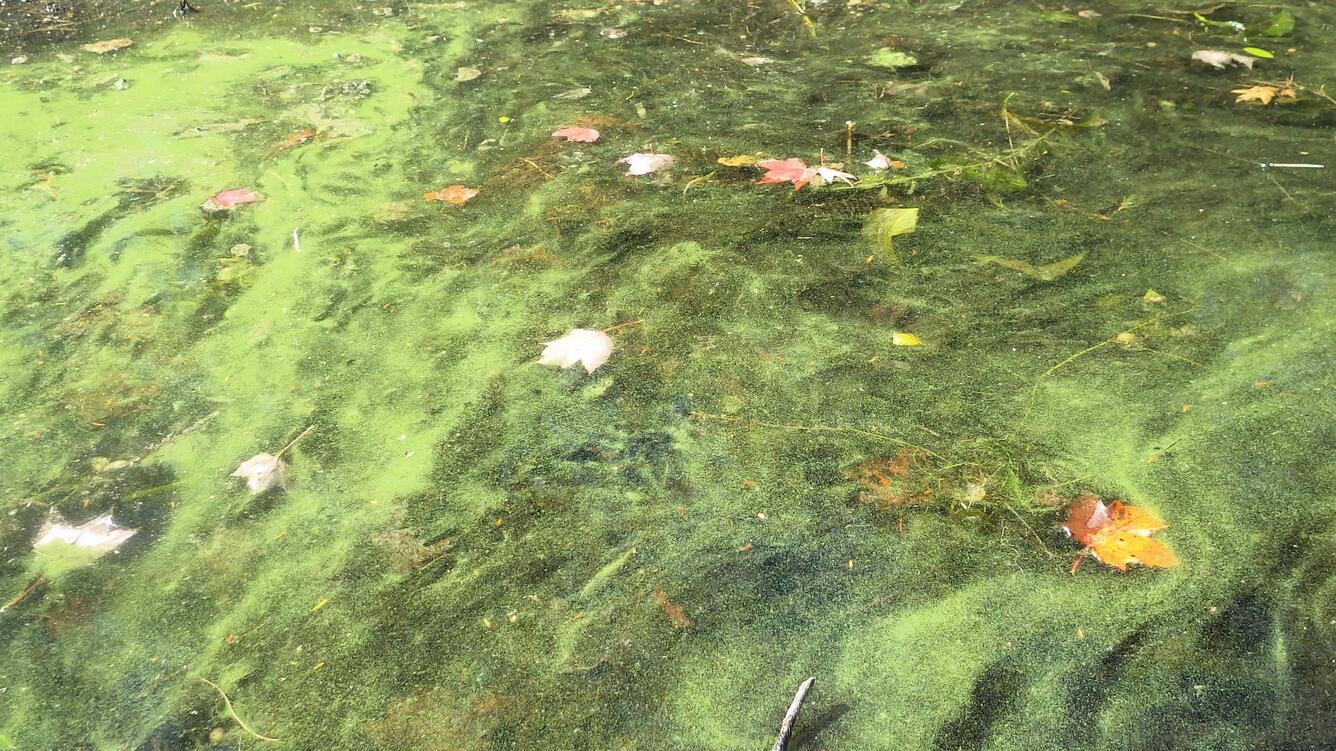
Source: U.S. Geological Survey – Cyanobacteria bloom near the shoreline of North Bar Lake (public domain)
What is the role of oxygen in water quality?
Dissolved oxygen is a core indicator of ecosystem health. During daylight, a bloom can raise oxygen near the surface, but when algae die and decay, bacteria consume oxygen and can create low-oxygen zones. In stratified lakes, this process may concentrate oxygen loss at depth, worsening habitat stress and overall water quality.
What are algae blooms and dead zones?
A “dead zone” is an area with oxygen levels so low that many organisms cannot thrive. In inland waters, dead zones are often tied to bloom decay and poor mixing. Forecasting and communications help agencies prepare sampling and public messaging during peak periods. NOAA provides seasonal forecasts for Lake Erie that support planning and can help drinking water teams decide when to intensify monitoring.
Resource: NOAA – Lake Erie Harmful Algal Bloom Forecast.
Effects of algal blooms on freshwaters
In lakes, reservoirs, and slower rivers, an algal bloom is rarely just an isolated incident; it is a shift in how the whole system behaves. Nutrients that arrive with runoff and wastewater can tip the balance toward rapid growth; warm, calm periods then help algae stay near the sunlit surface. As biomass builds, water turns less transparent; light drops, aquatic plants lose ground, habitat quality changes. When the bloom collapses, microbes break it down and oxygen can fall sharply, especially overnight or in deeper layers; fish and invertebrates feel that squeeze first. For a clear overview of cyanobacteria and bloom dynamics, see USGS guidance, and for the nutrient side of the story, the U.S. EPA nutrient pollution resources.

photo credits: U.S. Geological Survey – Mallard Duck swimming
Impacts beyond toxins
Toxins are only one part of the impact. Even without confirmed toxins, blooms can still bring surface scums, foul odors, and swings in pH that complicate nutrient and metal cycling; they can also drive low oxygen pockets that repeatedly stress wildlife and reduce biodiversity. Because people and pets interact with freshwaters directly, public health agencies track bloom related exposure and symptoms; the CDC HAB health information is a practical reference for recognizing risk.
The most durable fix is preventive and catchment led: limit nutrient inputs, protect buffers and wetlands, and pair field monitoring with early warning indicators such as chlorophyll-a and dissolved oxygen; NOAA also maintains accessible background material on HABs and forecasting concepts via NOAA HAB resources.
Water Management: How do you stop algae from growing in a lake?
Stopping blooms starts with prevention. The first step is reducing the amount of nutrients entering the lake and limiting the conditions that let algae dominate surface waters. Practical actions include:
- Target nutrient hotspots (runoff pathways, drains, overflows) and track load reductions over time.
- Strengthen natural buffers (vegetated shorelines and wetlands) to intercept nutrients before they reach open water.
- Run an early-warning routine so you can respond quickly during warm, calm periods and protect the water supply.
If your objective is to stop water contamination linked to blooms, measure progress in trends: fewer high-risk days, fewer peak biomass events, and more stable drinking water operations. Over time, reducing the amount of nutrient loading supports clearer water and a healthier habitat.
Easy installation and lower costs with ultrasound technology
In lakes and reservoirs where blooms recur, low-power ultrasound can be used as a preventive measure. By interfering with buoyancy regulation, algae cells are less able to accumulate at the surface, helping keep conditions more stable.
Learn more: How LG Sonic Ultrasound Technology Controls Algae.
Protecting surface waters
Monitoring turns uncertainty into decisions. This approach is key when the goal is to stop water pollution before blooms affect treatment and public use. When teams track pigments, dissolved oxygen, and temperature profiles, they can spot bloom conditions early and protect water quality before impacts escalate. This supports clean water goals and helps utilities plan water treatment operations.
Integrated platforms combine sensors and algae control so teams can manage bloom risk while building a long-term dataset on water quality. This makes it easier to confirm whether catchment actions are reducing the amount of nutrient-driven pressure over time.
Product context: Monitoring Buoy and MPC-Buoy.
Conclusion
To stop water contamination linked to harmful algal blooms, focus on the drivers: nutrient loading, warm temperatures, and limited mixing. Catchment measures aimed at reducing the amount of nutrients entering lakes and reservoirs are foundational. Paired with monitoring and preventive tools, these actions protect water quality, support safer drinking water, and help surface waters recover over time.