


Introduction
Treatment of water is the backbone of safe supply. Utilities select methods of treatment based on source risks, then verify performance with monitoring against standards. When teams design water system treatment around actual hazards, plants run efficiently, taste and odor issues drop, and compliance stays steady during blooms and storms. Below we compare these different treatment methods and show how each technique fits into a practical, measurable program from source to tap.
Core principles that guide water system treatment
Great programs stay simple and evidence based. Define contaminants of concern, choose the most effective treatment methods for those targets, and verify with data. In practice, water system treatment builds from source protection to plant operations to distribution monitoring. Standards from global and national authorities provide the checkpoints that keep results comparable and auditable.
For global guidance, consult the WHO Guidelines for Drinking-water Quality, and for the United States see the EPA National Primary Drinking Water Regulations that link process control directly to health protection.
Regulatory anchors and risk management
Regulatory frameworks translate science into clear actions. In the European Union, the recast drinking water directive emphasises a risk based approach from catchment to consumer. In the U.S., the Safe Drinking Water Act and implementing rules specify maximum contaminant levels and treatment techniques. These anchors keep Treatment programs focused on measurable outcomes and transparent reporting.
See the EU Drinking Water Directive summary and the EPA’s overview of drinking water regulations and contaminants for reference.
Methods of water treatment and where they excel
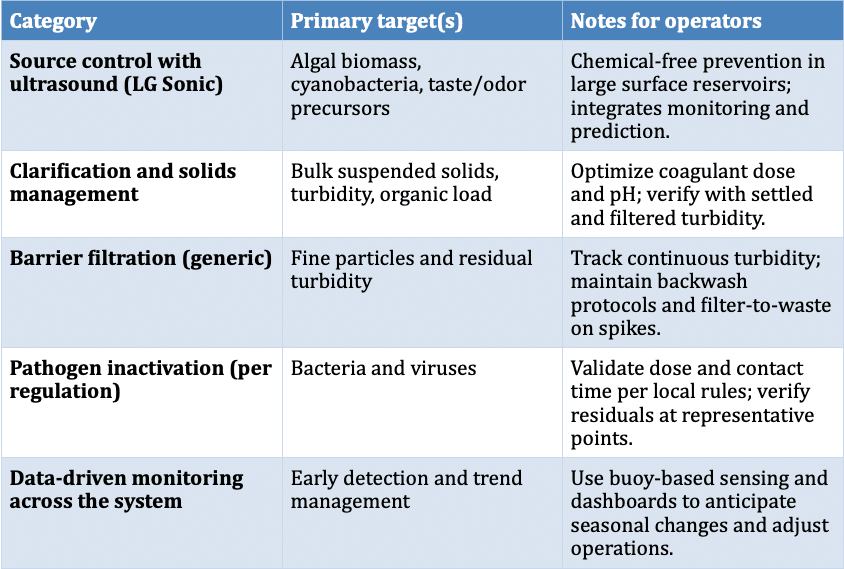
Different treatment methods excel against different hazards. Matching a treatment technique to a specific contaminant improves performance and reduces cost. The table below maps common steps to their primary targets so teams can compare methods of water treatment at a glance.
Backgrounders for the public and operators include the NOAA introduction to harmful algal blooms and the CDC health page on HABs. For cyanobacteria science and pigments, see USGS HAB resources.
Designing a multi-barrier train
The multi‑barrier idea is straightforward. No single step is perfect in all conditions, so we combine barriers so that weaknesses in one are covered by strengths in another. Treatment of water follows an ordered sequence: source control, clarification to remove bulk solids, filtration for fine particles, and pathogen inactivation per regulation. A well designed sequence lets operators switch emphasis among methods as raw water shifts.
- Clarify first to reduce solids load and protect downstream barriers.
- Choose a water treatment technique for taste and odor before complaints grow.
- Pilot changes rather than guessing at full scale and log results in the playbook.

Ultrasound Algae Control for large surface waterbodies
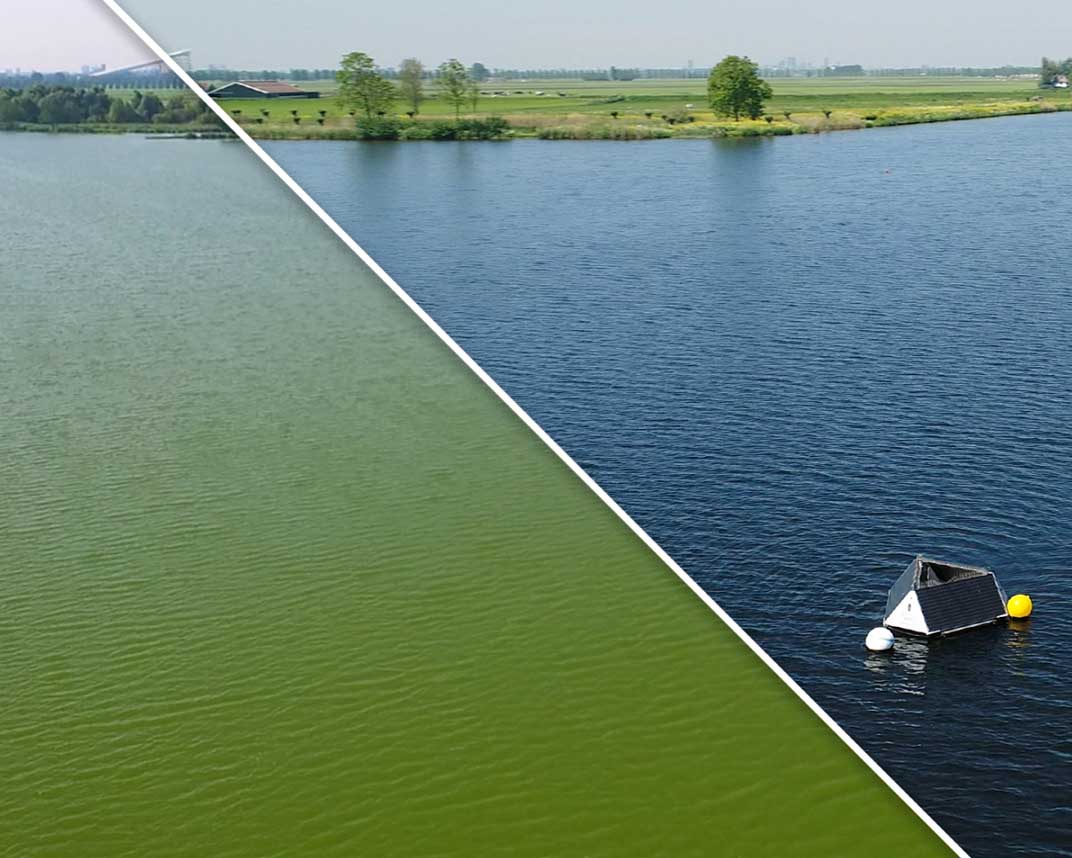
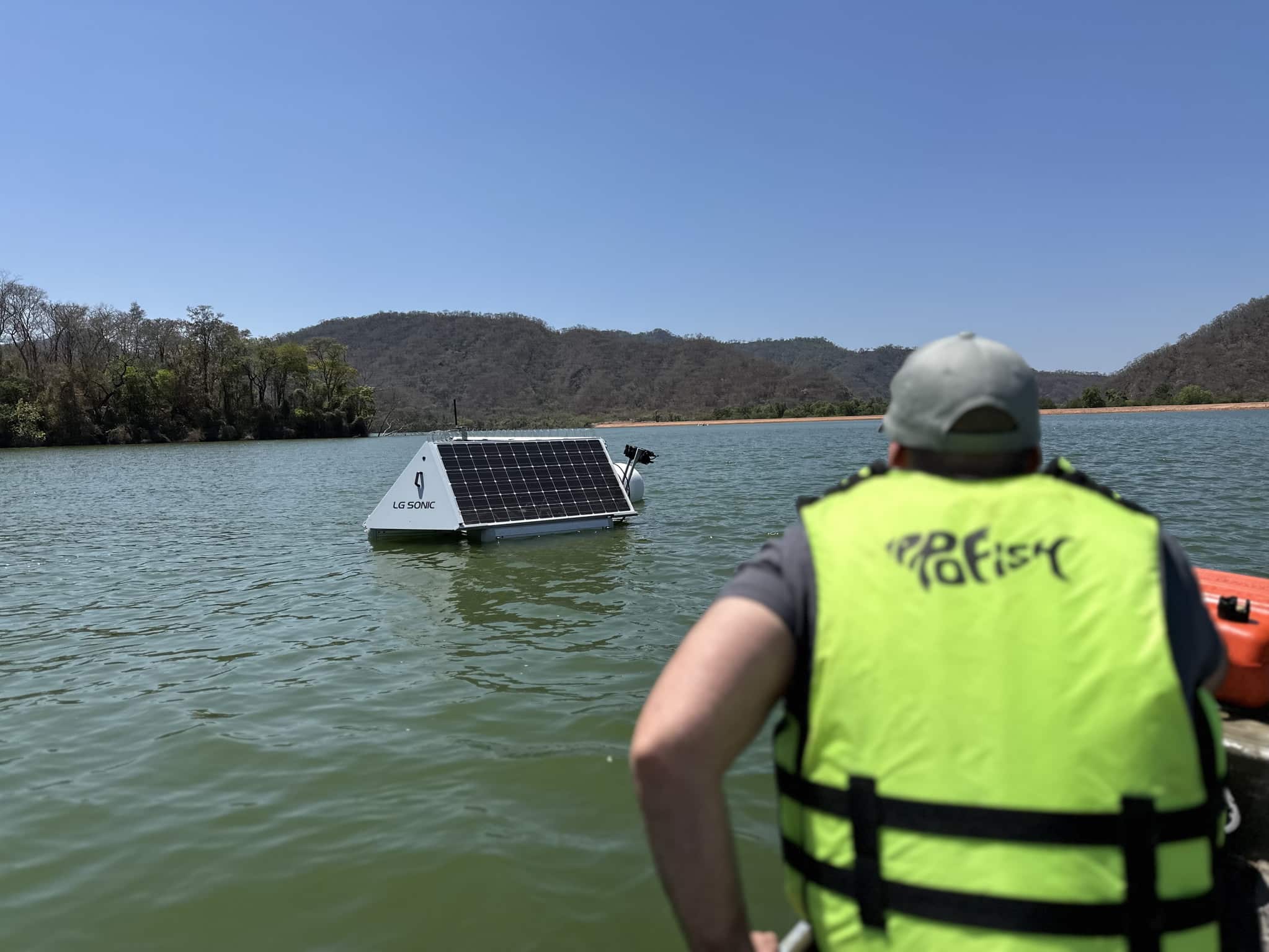
Ultrasonic technology prevents odor and taste issues by controlling algae growth at the source. Through precisely tuned ultrasonic frequencies, the system targets algae’s buoyancy regulation, stopping them from rising to the surface where they photosynthesize and release compounds such as geosmin and MIB; the main causes of earthy or musty tastes in drinking water. This chemical-free approach not only stabilizes water quality but also supports sustainable treatment operations for large reservoirs and utilities. Curious? Read our case study about: 300% filter runtime boost in municipal drinking water.
Verification: How to prove treatment of water is working
Verification links process actions to outcomes. Track turbidity continuously after each filter, verify disinfectant residual at representative points, and sample for microbial indicators. For cyanotoxins, combine pigments or cell counts with targeted toxin tests. These steps keep water system treatment results transparent and defensible during audits.
Operator references include EPA’s system overview and USGS drinking water topics. For program design, the WHO Guidelines explain how to align monitoring with health based targets.
Operations playbook for changing conditions
Operations succeed when they anticipate change. Teams document why specific methods of water treatment were selected, then set triggers to switch to other water treatment methods when metrics drift. That playbook lets crews act quickly without improvising under pressure.
- When turbidity trends upward, shorten filter runs and review coagulation pH and dose.
- Before bloom season, verify PAC stocks, calibrate online analyzers, and pre brief communications staff.
- After heavy rain, sample upstream and consider intake depth changes while adjusting the water treatment technique.
Energy, residuals, and sustainability in Treatment of water
Energy and residuals management shape long term performance. Membranes and advanced oxidation can deliver excellent quality, yet they add energy demand. Optimized clarification and filtration often reduce overall energy by making downstream steps easier. Sludge handling, concentrate management, and carbon changeout plans keep costs predictable and environmental impacts controlled. A balanced portfolio of methods protects both budgets and watersheds.
Common pitfalls to avoid
Three pitfalls recur in many facilities. First, underestimating seasonal variability leads to late responses. Second, treating the distribution system as an afterthought creates backflow and residual problems. Third, skipping pilots for a new treatment technique increases risk. Each pitfall is avoidable with monitoring plans and clear triggers.
Frequently asked questions about Treatment of water
Which water treatment methods matter most for pathogens?
Filtration plus disinfection is the core. Maintain low filtered turbidity and validated disinfection dose. If the source changes, revisit the water treatment technique and consider membrane integrity tests or UV dose checks to maintain safety.
How do I choose between similar methods of water treatment?
Start with the specific hazard and constraints. Cost and footprint matter, but verified performance should lead. When two treatment methods look equivalent, select the simpler option to validate routinely and train across shifts.
What about emerging contaminants?
Guidance evolves. For program design, begin with the WHO Guidelines and the EPA’s technology resources, then pilot the chosen water treatment technique before full adoption.
Conclusion
Treatment of water is a measurable, day to day practice, not a mystery. Programs that map risks to specific water treatment methods, verify outcomes, and share results with the public deliver resilient service. A flexible set of methods allows plants to respond to seasons and storms with confidence. By selecting the right water treatment technique at the right time and maintaining disciplined water system treatment, utilities protect health while managing cost.