


Introduction
Water and pH sit at the heart of water quality decisions because when potential of hydrogen changes, metals dissolve, pipes corrode, and this is how ecosystems behave. Even when water looks clear, the pH levels can drift with weather, geology, and biological activity. This guide explains what are the optimal levels of safe drinking water parameters, why it matters, and how to interpret “good” or “safe” ranges without over-simplifying.
What is the water pH?
The pH of water describes how acidic or alkaline it is on a scale from 0 to 14. Values below 7 indicate acidic water, 7 is neutral, and values above 7 indicate alkaline conditions. Because the scale is logarithmic, a one‑unit change represents a tenfold change in hydrogen ion activity. That means a shift from 7 to 6 is a big chemical change, not a tiny step
For a clear overview of the value in water scale, see the USGS Water Science School page.
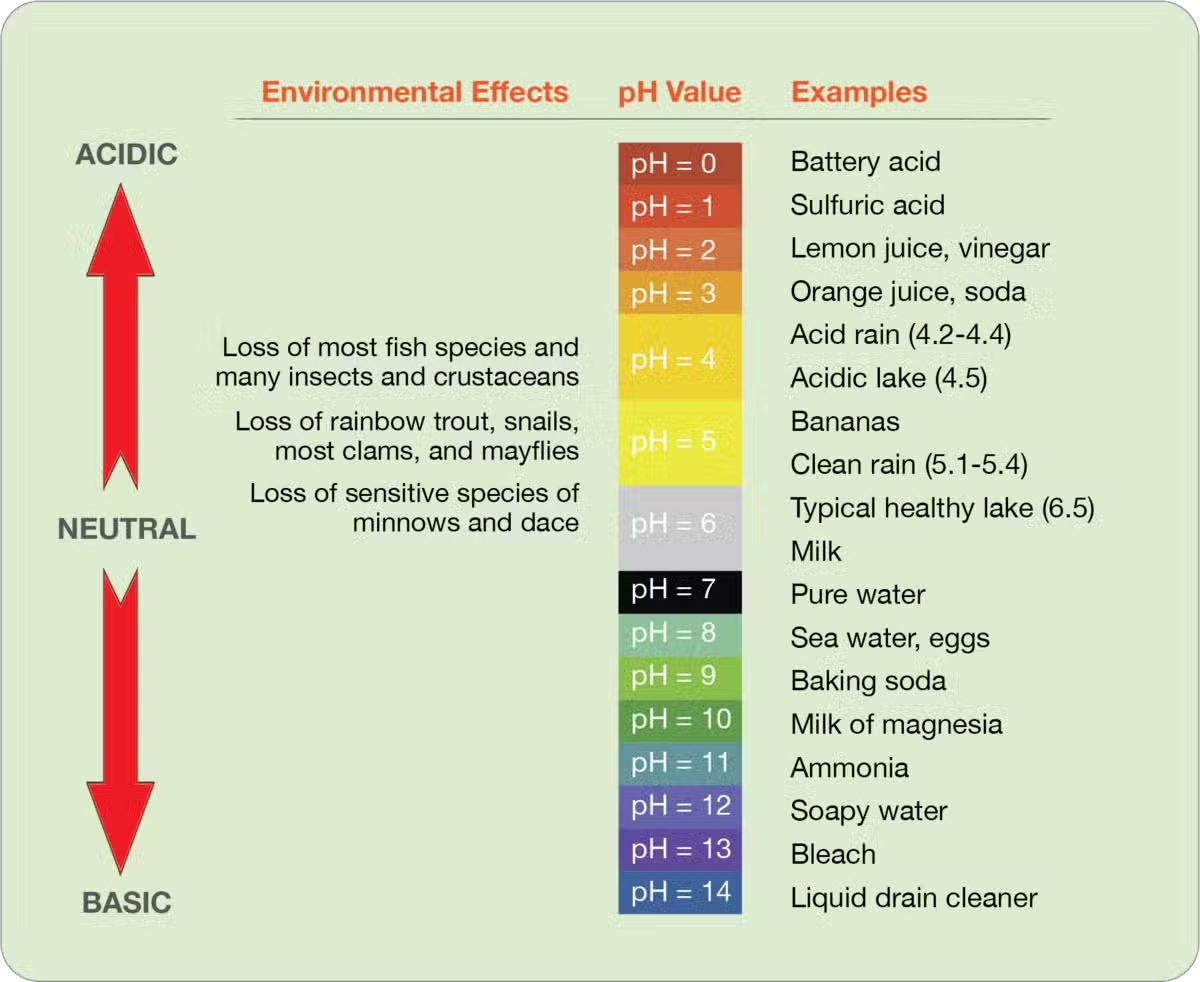
What factors affect water pH?
In most surface waters, water pH responds to three main forces: carbon dioxide, buffering minerals, and biology. More dissolved CO₂ lowers pH; less CO₂ raises it. Carbonate minerals (often reflected by alkalinity) buffer swings. Meanwhile, photosynthesis and respiration can create strong day–night patterns in lakes and reservoirs.
Common causes of pH changes you can see in routine data:
- Seasonal temperature shifts and stratification in reservoirs.
- Storm inflows that change dissolved solids and organic acids.
- Geology and alkalinity (e.g., limestone areas often support a higher, steadier pH).
- Algal growth that raises pH in daylight and lowers it overnight.
Natural and human influences
Natural waters rarely sit at one fixed number. Rainwater is often slightly acidic, and catchment geology can drive the normal water pH level up or down. Human pressures can also shift water and pH over longer timeframes—for example, rising atmospheric CO₂ contributes to ocean acidification.
NOAA explains ocean acidification here: NOAA Ocean Service – What is ocean acidification?.
How does pH affect water quality and safety?
pH usually affects health indirectly by changing how other risks behave. Lower levels can increase corrosion potential and, in some settings, increase the likelihood of metals entering water from plumbing. Higher levels of potential of hydrogen can encourage deposits and can change taste and feel. It also influences how quickly biological processes run and how stable a water body remains during warm months.

What is a good pH level for drinking water?
If you search “best pH for drinking water” or “safe pH levels in drinking water,” you will find many opinions. Regulators use mostly as an acceptability and operational guide rather than a single, universal health limit.
• In the United States, EPA lists a secondary (non-enforceable) range of 6.5–8.5 to help manage taste, scaling, and corrosion.
• In the European Union’s Drinking Directive, the indicator parameter for hydrogen ion concentration is ≥ 6.5 and ≤ 9.5 pH units for water intended for human consumption.
References: EPA Secondary Drinking Water Standards
In practice, a “good drinking water” is the one that keeps your distribution system stable. That stability reduces complaints, supports corrosion control, and helps operators keep water pH predictable across seasons.
How to measure and track this level?
You can measure the ph of water using calibrated electrodes in handheld meters or fixed probes. To trust the number, you need consistent sampling, temperature compensation, and regular calibration with buffer solutions. Because pH can swing quickly in surface waters, continuous monitoring often reveals patterns that grab samples miss.
- Check calibration routinely and clean probes to avoid drift.
- Log pH with temperature to interpret genuine chemistry vs. probe behaviour.
- Watch trends, not single points—sudden changes often matter more than small differences.
Lakes and reservoirs: what daily swings can tell you
In reservoirs, water and pH often move together with algae dynamics. In sunny weather, photosynthesis can raise pH near the surface; at night, respiration can lower it again. When those swings widen, managers often see related changes in dissolved oxygen and other indicators. Tracking these levels alongside other parameters helps teams spot early warning signs and manage risk before it becomes a visible problem.
Real-time monitoring platforms can help capture these patterns. For example, LG Sonic’s Monitoring Buoy can measure pH along with other water quality parameters so teams can follow trends and set alerts.
Operational note: pH and corrosion risk
When levels of potential of hydrogen drops, corrosion potential often increases, which matters because corrosion can contribute to metal release at the tap. EPA’s Lead and Copper Rule is built around corrosion control as a treatment technique to reduce lead and copper levels in drinking water systems.
Conclusion
Many factors can influence water, more than a single lab value: they shape corrosion risk, taste and deposits, and ecosystem stability. When you understand the parameters for your specific supply and track water pH over time, you can keep the system inside a stable operating range. That makes it easier to maintain safe parameter levels in drinking water, respond quickly to changes, and communicate clearly with stakeholders.