

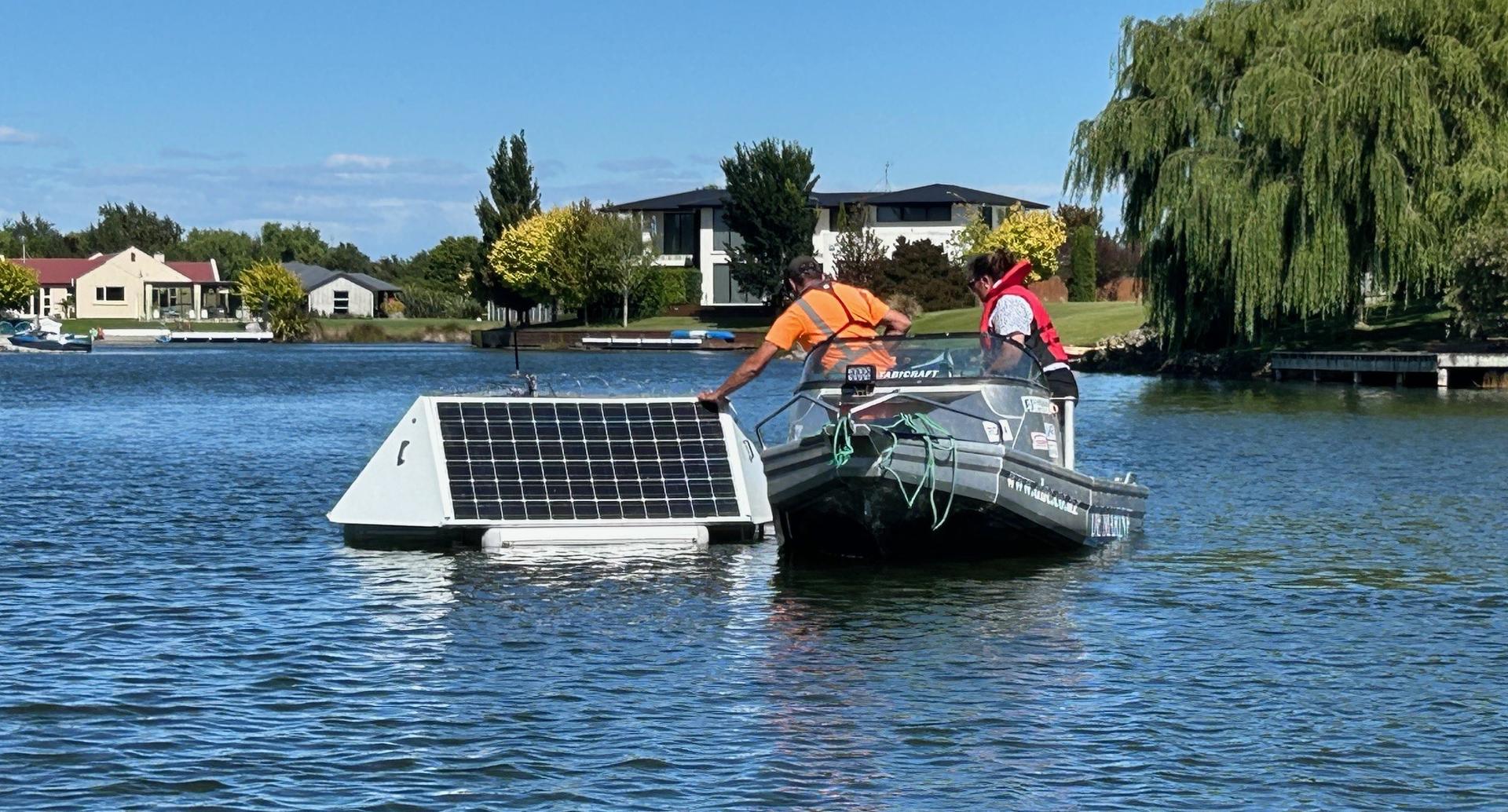
Lake Hood is an important recreational and ecological asset in New Zealand. It supports activities such as water skiing, swimming, and community events. In response to recurring cyanobacteria challenges, a scientific algal control study has been launched to evaluate different treatment approaches. This is to support long-term lake health.
The study, led by Lincoln University, brings together researchers, local authorities, and technology providers to assess how different algal control solutions perform under real lake conditions. The goal is to generate robust, lake-specific data that can inform effective and sustainable management decisions.
Understanding Lake-Specific Algal Dynamics
Cyanobacteria are a natural part of many freshwater systems, but under favorable conditions they can proliferate rapidly, leading to health risks and restrictions on water use. Professor Susie Wood of Lincoln University, who is leading the study explains:
“A scientific approach is not just important for Lake Hood, but any lake, because every lake is different and the causes are different in each system.
Because resources for lake management are limited, the study focuses on identifying solutions that are effective, targeted, and suitable for Lake Hood’s specific conditions, rather than applying generic treatments. The research design allows multiple approaches to be tested side by side, supporting evidence-based decision-making.
Controlled Testing of Algal Control Approaches
To support the study, sealed shipping containers have been installed within Lake Hood’s canal system. These act as controlled “mini lakes”, remaining open to bottom sediments where algal biomass can accumulate and persist. This setup allows researchers to evaluate how different products interact with cyanobacteria under comparable conditions.
This scientific algal control study includes a range of chemical, biological, and physical approaches, each aiming either to suppress cyanobacteria directly or to enhance natural competitive processes within the water column. Some solutions may prove suitable for targeted use in high-risk areas, such as recreational zones, rather than lake-wide application.
Evaluating Ultrasound Technology in the Field
As part of the trial, ultrasound devices have been installed around Lake Hood to assess their effectiveness against cyanobacteria blooms. Ultrasonic technology works by emitting high-frequency sound waves that disrupt cyanobacteria cells, reducing their ability to regulate buoyancy and form surface accumulations.
The installation allows researchers to evaluate ultrasound as a non-chemical, in-lake management tool, alongside other treatment options. Results from this phase will contribute to a broader understanding of how ultrasound performs under New Zealand lake conditions.
Monitoring, Safety, and Ongoing Research
Water quality parameters will be monitored throughout the study period, which runs until the end of April. Health authorities continue to provide guidance following the detection of elevated cyanobacteria levels. Particularly in high-use areas such as the water ski zone.
The Lake Hood study forms part of the Our Lakes, Our Future national research initiative. It aims to improve freshwater health across New Zealand through collaboration, data-driven insights, and long-term planning.
By combining scientific research, field trials, and continuous monitoring, the Lake Hood project represents an important step toward sustainable, evidence-based algal management that can support both recreational use and ecological resilience.