

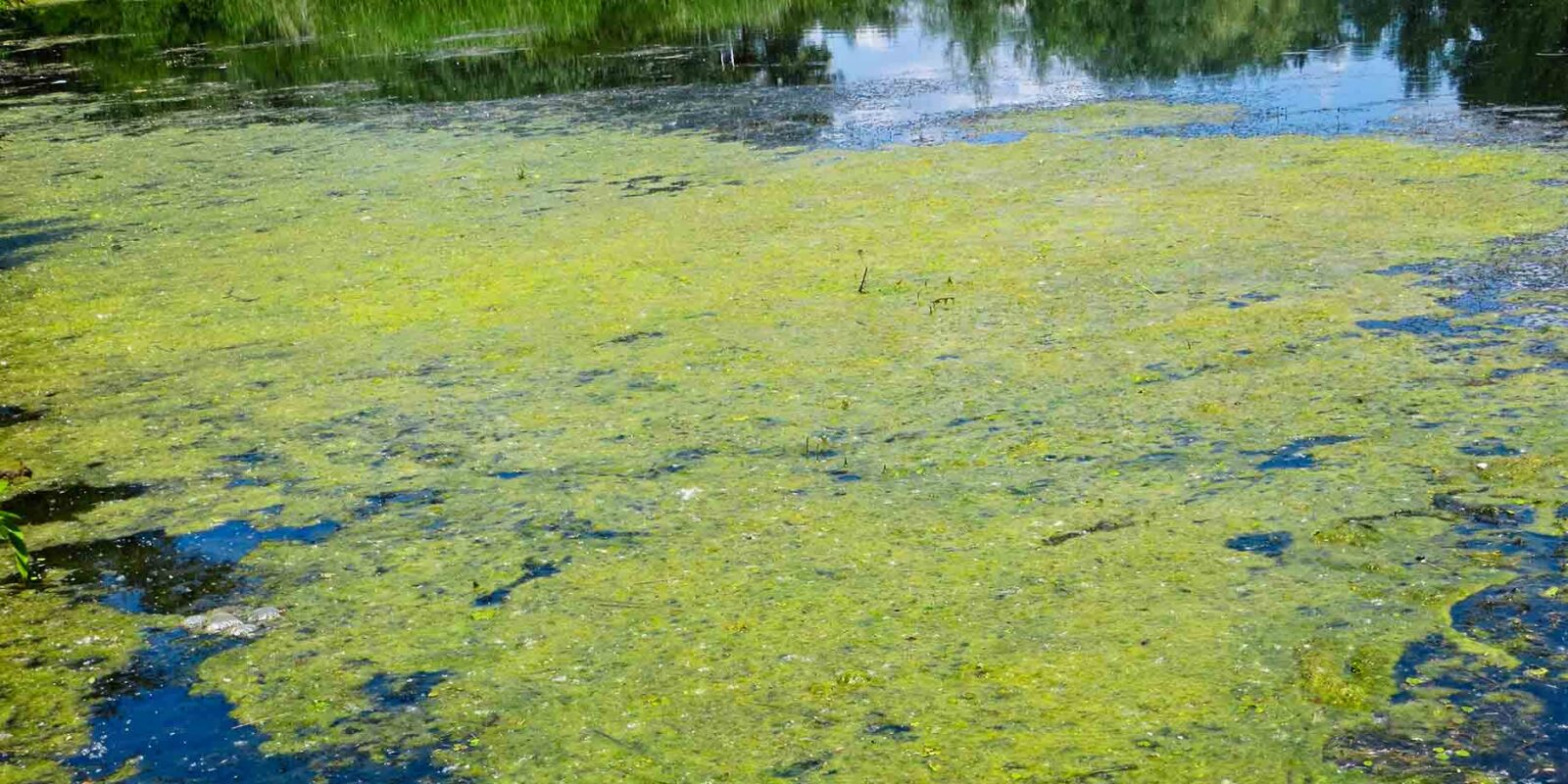
- High temperatures, stagnant water, and nutrient overload usually result in excessive algal growth, leading to algal blooms.
- Algae blooms usually occur in freshwater or marine water bodies where sufficient light and nutrient concentrations support algae production.
- To prevent or restore an unbalanced ecosystem, it’s important to tackle algae-related issues caused by excessive nutrients and environmental conditions.
These so-called algal blooms deplete oxygen in water, release algal toxins, and cause bad taste and foul odors. Without treatment, algae continue to grow, receiving sunlight. This disrupts the natural balance of an ecosystem and affects the health of aquatic animals and plants.
How does algae grow?
Algae grow by photosynthesis. For this, they need sunlight and nutrients, such as phosphorus and nitrogen. An overabundance of nutrients usually leads to excessive algal growth, which can adversely affect the ecosystem.
Algae are a diverse group of unicellular algae and multicellular photosynthetic microorganisms that appear in a wide range of environmental habitats. For example, including fresh water and marine water bodies. They are photoautotrophic cells containing chlorophyll, with simple reproductive structures and tissue not differentiated into roots, stems, or leaves. The term algae covers many algae species that produce oxygen through photosynthesis, contributing an estimated 50-80% of the oxygen we breathe. Besides producing oxygen, algae play an important role in aquatic ecosystems by forming the base of the food chain and providing algal biomass that serves as food for fish and other aquatic animals.
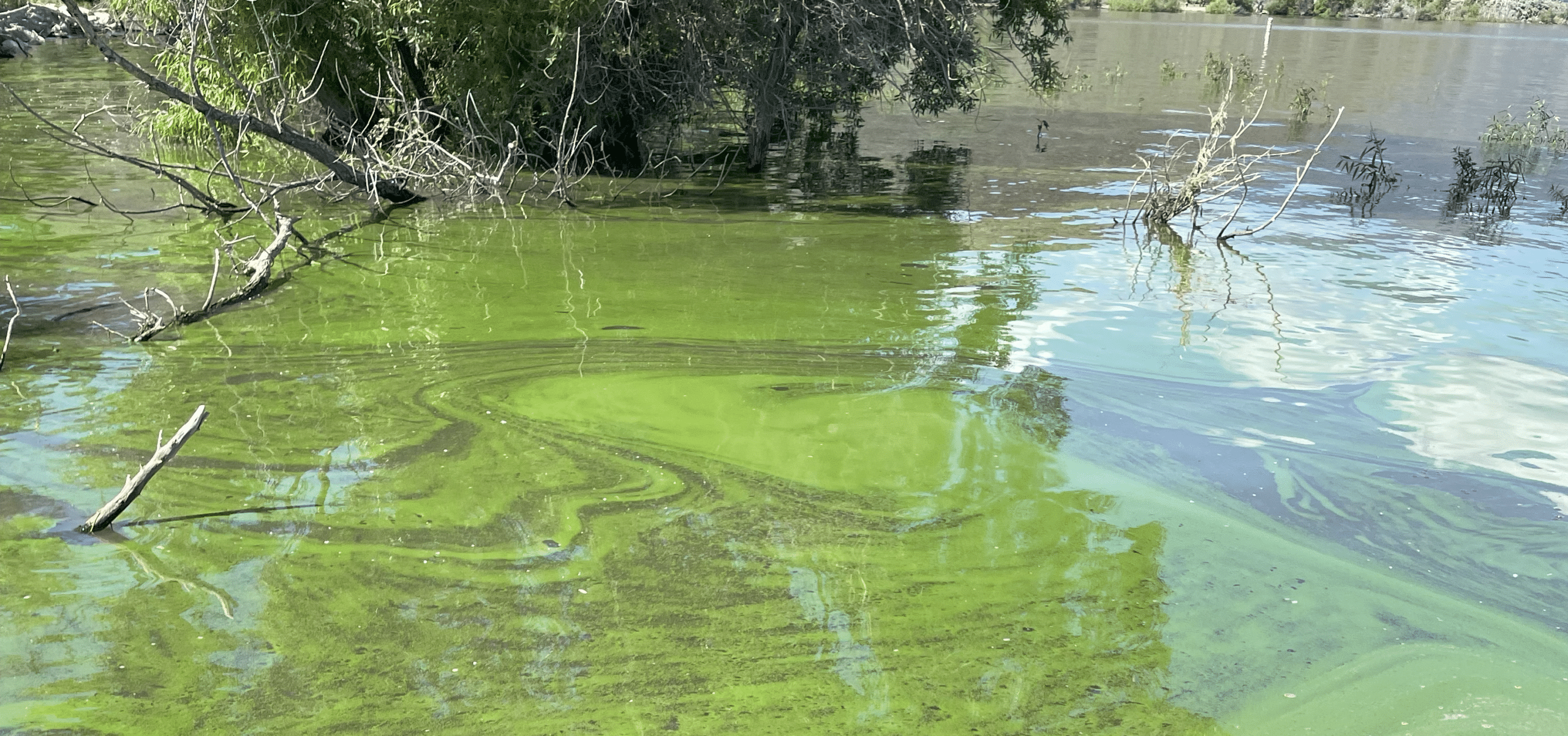
All natural waters contain basic levels of algae, which are essential for maintaining ecological balance in a water body. These algal concentrations belong to a normal lake ecology. However, many causes, including a combination of high concentrations of excessive nutrients such as nitrogen and phosphorus from fertilizers, warmer temperatures in summer and early fall, and sufficient light (including direct sunlight), encourage excessive algae growth. This leads to a buildup of algal biomass and bloom formation. When algae species grow in excess, they form blooms that can disrupt the natural balance and contribute to harmful algal blooms (HABs). This poses risks to water quality and aquatic life.
When does algae growth cause problems?
When a specific algal type starts growing exponentially, it suffocates other aquatic organisms, which are essential for a balanced lake ecology. At the surface, light can’t penetrate the water column anymore, pH increases, plant growth is reduced, and inevitably, dissolved oxygen also decreases. A lake’s natural balance shifts even more when aerobic bacteria die, and anaerobic bacteria take over the nutrient digestion. This deteriorates water quality, eventually leading to massive fish and other aquatic life die-offs. Intense algae production is even more common than you’d think.
Algal blooms usually appear in freshwater sources, especially in the summer. This also leads to thermal stratification, causing serious damage to the aquatic environment. They can easily be identified by the green coloration of the water, which comes from the high density of pigmented cells. Although several algal species can form blooms, cyanobacterial harmful algal blooms (CyanoHABs) are the most potent producers of dangerous toxins. This can seriously harm humans, pets, aquatic plants, and fish.
The Global Economic Cost of Uncontrolled Algae Growth
Beyond ecological damage, uncontrolled algae growth carries staggering economic consequences. When algae blooms threaten drinking water supplies, municipalities face emergency treatment costs, supply disruptions, and potential boil-water notices that burden millions of residents. In the food and beverage industry, algae threaten it by contaminating water supplies used for crop irrigation and food processing, including animal feed. The National Resource Defense Council estimates that freshwater algal bloom management alone costs $4.6 billion annually in the United States, with losses driven by emergency treatments, lost tourism revenue, and agricultural damage. For water utilities managing drinking water reservoirs, a single bloom event can require emergency interventions costing hundreds of thousands of dollars. The longer algae remain uncontrolled, the higher these costs become. Proactive algae control through ultrasonic technology prevents the cascade of economic damage that reactive treatments cannot address. Learn more about the economic impact of algae blooms and how industries are shifting toward prevention strategies.
Does ultrasound treat algal blooms?

To prevent or restore unbalanced ecosystems, it’s critical to control problems as they occur. When it comes to lakes or larger ponds, current treatment methods include aeration, mixing, and ultrasound. As an alternative to harsh chemicals, at LG Sonic, we’ve developed an ultrasonic, floating unit that effectively controls harmful algal blooms.
Controlling algae pollutants with ultrasound is a well-established, eco-friendly, and cost-effective solution that is completely safe for humans, fish, and aquatic plants. This method helps to remove nutrients such as nitrogen and phosphorus from the water, reducing the growth rate of algae and limiting lipid accumulation in harmful algal species, including cyanobacteria. By targeting the algal culture in the water body, ultrasound treatment disrupts the life cycle of algae and decreases algal biomass, contributing to improved water quality and ecosystem health.
Early Detection and Real-Time Monitoring: The Prevention Advantage
Controlling algae growth becomes exponentially more difficult once blooms are established. This reality has prompted a critical shift toward early detection and real-time monitoring systems that identify algae problems before they escalate. Advanced monitoring technologies like phosphate analyzers and vertical water profilers track nutrient levels and detect the conditions that trigger bloom formation, allowing operators to act before algae proliferate out of control. When combined with ultrasound treatment systems, real-time monitoring creates a comprehensive algae management approach. LG Sonic’s MPC-Buoy integrates continuous water quality monitoring with ultrasonic algae control, providing 24/7 surveillance and automated treatment. This integrated approach prevents blooms from forming rather than waiting for an emergency response. For water managers responsible for drinking water reservoirs, recreational lakes, and cooling systems, the difference between prevention and reaction is the difference between smooth operations and crisis management. Explore our phosphate monitoring technology to understand how early detection enables effective algae control before problems escalate.
American Water proved ultrasound algae control with peer-reviewed research — 89% less algae, 22% fewer chemicals, 1.8-year ROI
American Water — the largest US public water utility — deployed MPC-Buoys at Canoe Brook Water Treatment Plant after recurring toxic algae and cyanobacteria were affecting source water quality. Independent peer-reviewed research confirmed the results: 89% less algae growth, 22% reduction in chemical usage, and filter run times improved by 127% compared to the prior year.
Climate Change Intensifies the Need for Algae Control
Climate change is fundamentally altering algae growth patterns globally. Warmer water temperatures extend the algae growing season, nutrient runoff from increasingly severe storms delivers more phosphorus and nitrogen to water bodies, and changing precipitation patterns create stagnant conditions ideal for bloom formation. Water managers face unprecedented algae challenges in regions that historically had minimal bloom problems. Lakes and reservoirs once considered safe now experience regular harmful algal blooms. This shifting reality makes algae control not optional but essential for water security. Traditional chemical treatments struggle to keep pace with climate-driven algae growth, while ultrasonic technology provides the scalability and sustainability needed for long-term management. By controlling algae growth proactively, before climate impacts trigger major bloom events, water operators can maintain system stability despite environmental pressures. Understanding how cyanobacteria and other harmful algae respond to climate stress informs the urgency of implementing robust control systems now.
How does ultrasound control algae?
Blue-green algae contain gas vesicles. During the day, they travel up and down throughout the water column to obtain sunlight and nutrients. Our technologies emit ultrasonic waves in the top water layer, affecting their buoyancy regulation, fixing them in the water column. We use specific ultrasonic programs that adapt to changing water and algal conditions.
Due to a lack of sunlight and nutrients, the algae will sink to the bottom, where they eventually decompose. Having a certain level of algae is normal and natural for a healthy ecosystem; the technology doesn’t eliminate them, but reduces them by up to 95%. This way, the ecosystem is restored and thriving. Algae levels gradually decrease as soon as ultrasonic treatment is applied. However, without any treatment, the blooms will recur each year.
The combination of continuous monitoring and targeted ultrasonic treatment gives water managers the tools to break the seasonal bloom cycle, rather than reacting to it year after year. For lakes, drinking water reservoirs, and industrial water bodies managing recurring algae problems, early intervention is significantly more cost-effective than reactive treatment.
Long-Term Ecosystem Recovery Through Balanced Algae Management
One of the most misunderstood aspects of algae control is the goal: it’s not to eliminate algae, but to restore balance. Algae are essential components of healthy aquatic ecosystems, forming the foundation of food webs and producing 50-80% of Earth’s oxygen. The problem emerges when algae growth exceeds ecosystem capacity. By reducing algae by up to 90% while maintaining natural algae populations, ultrasonic technology allows ecosystems to recover their natural balance. This means dissolved oxygen levels stabilize, native aquatic plants re-establish, fish populations return, and the self-sustaining ecological functions that make water bodies healthy resume operation. Importantly, this recovery is permanent only if algae control continues. Without ongoing treatment, nutrient conditions persist, and blooms recur annually, requiring continuous algae management. For water bodies that have experienced years of harmful algal blooms, the recovery timeline can extend years, demonstrating why prevention is far more effective than attempting to restore damaged ecosystems. Discover how industries are achieving long-term water quality improvements through sustained algae control programs and learn about successful case studies from facilities worldwide.
Deployed across 60+ countries — chemical-free algae control
Without treatment, the blooms come back every year.
With the right system, they don’t have to.
The article is right: untreated algae recur seasonally as long as conditions favour growth. LG Sonic’s MPC-Buoy disrupts that cycle by continuously suppressing bloom formation at the source, monitoring water quality in real time, and adapting ultrasonic programmes to changing conditions, season after season, without chemicals and without manual intervention every six months.
*Up to 95% reduction. Results vary by site conditions.