

In short
- Eco-friendly technological solution. Safe for fish, plants, people, and pets.
- Predicts and prevents future algae blooms;
- Easy and fast to maintain.
The challenge: an algal bloom threatening the water supply for 1.3 million people
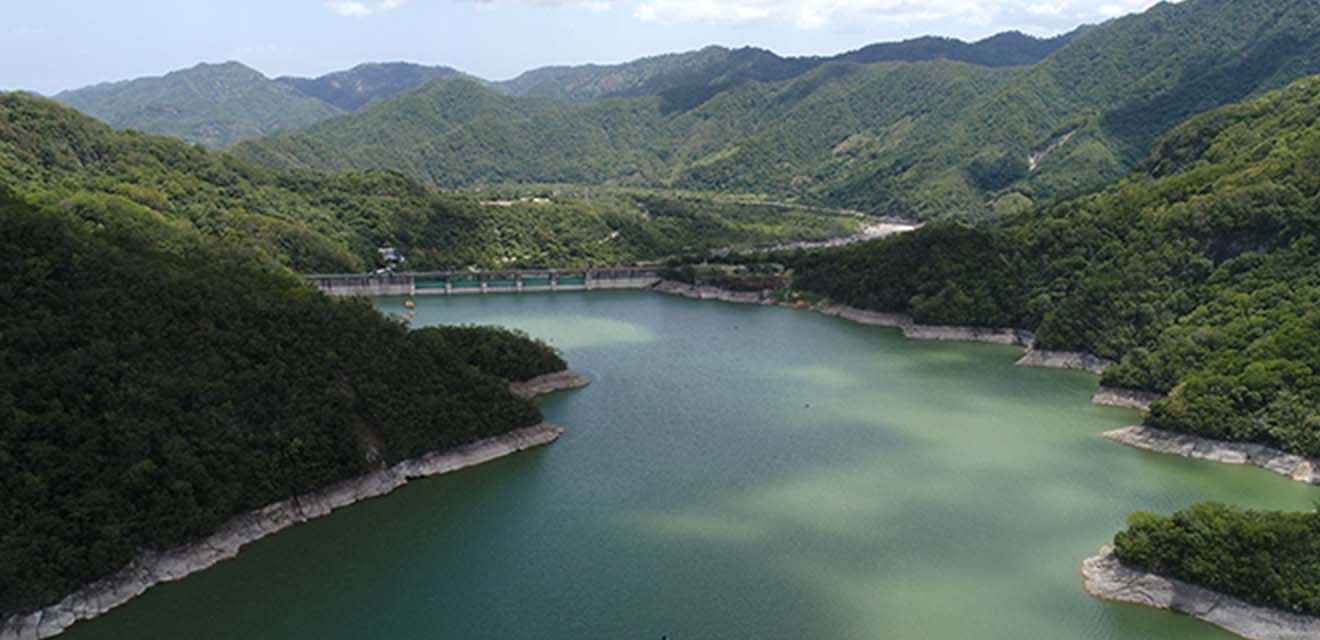
The Valdesia reservoir is the primary drinking water source for the city of Santo Domingo and its surrounding provinces in the Dominican Republic. Covering approximately 7km² and storing 167 million m³ of water, it supplies around 37% of 3.5 million inhabitants — over 1.3 million people.
At the end of 2018, a severe algal bloom spread across the reservoir, threatening the entire aqueduct operation. CAASD (Corporación del Acueducto y Alcantarillado de Santo Domingo), the public utility responsible for managing the water supply, was forced to act urgently. What followed was a systematic trial of every available treatment method — none of which worked.
#1: Treatment
When the bloom first appeared, CAASD attempted treatment with aluminium sulfate. For a reservoir of 7km², dosing the entire water body was practically impossible at the scale and frequency required. Results were inconsistent, and the algae continued to spread.
As the bloom intensified, it reached the water treatment plant. Filters became clogged with algal biomass and had to be removed and cleaned mechanically, a labour-intensive process that disrupted normal operations.
CAASD had used copper sulfate as an algaecide for many years prior. In this case, it failed to control the bloom. Aeration systems and additional chemical dosing were also explored, but both required frequent reapplication and proved operationally unfeasible at the reservoir scale.
When algae reached the plant intake, technicians recommended dosing calcium oxide at the entry point. The results did not meet expectations. A physical barrier, a net positioned near the aqueduct intakes to intercept algae, was trialled next. This required staff to be present around the clock, seven days a week, and still could not manage the volume of algae already formed.
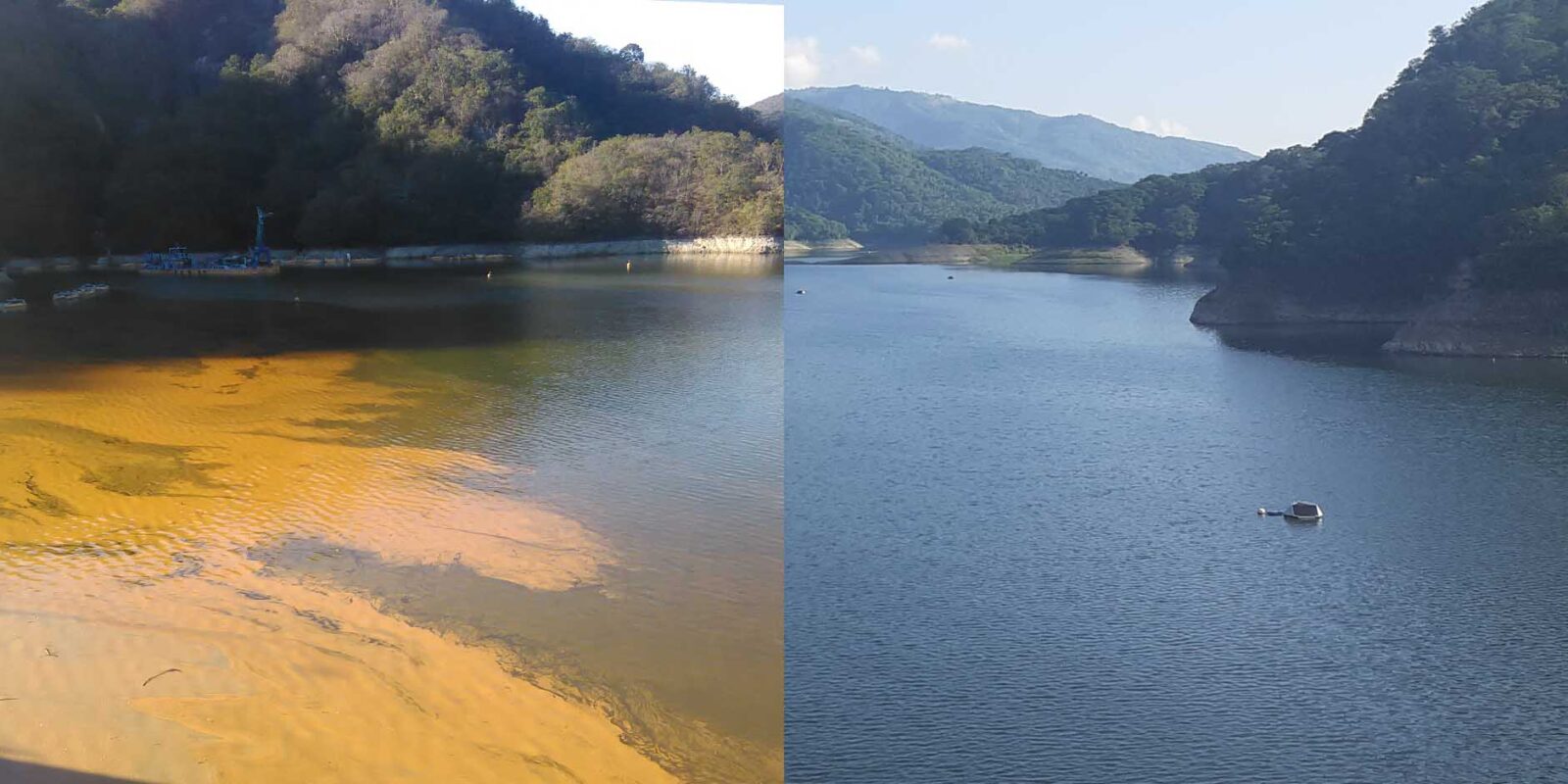
CAASD also attempted to overflow the dam to flush out the most contaminated surface water. The algae bloom, approximately one metre deep, remained out of control.
Throughout this period, CAASD kept the aqueduct in service. Significant improvement in water quality was only observed two weeks after beginning LG Sonic ultrasonic treatment without taking the system offline.
#2: Prevention
In the video below, you can see the difference in water quality before and after the ultrasonic treatment. The images speak for themselves. We can only imagine the gravity of putting at risk an aqueduct that supplies 37% of 3.5 million inhabitants.
On that note, Luis states that such a situation cannot happen again. He’s determined to do everything it takes to avoid it. He also reminds us of the disastrous implications of an aqueduct of this magnitude going out of operation:
“That is why I am so categorical in saying that we here have to do everything that is humanly possible so that this does not happen again. Everything, from the preservation of the lake, from controlling the discharge, to making an agreement with the integral management of the basin. The measures to be taken are multidirectional.”
He continues:
“We have to make these discharge of nutrients as little as possible, because reservoirs are always facilities that are prone to the development of algae due to the condition they have, where the water is stagnant.”
This is especially important in hot climate countries, which favor harmful algae.
“We have to be prepared, so that at any time we can face this type of situation. At the end of all the problems, we decided on the LG Sonic technology because it was the one that guaranteed us a permanent treatment with fewer complications, which will cover all the areas of the dam. And as a result of that, today we have 47 buoys installed on the dam. We have achieved excellent results.”, added the Subdirector of Operations.
LG Sonic technology has water quality sensors integrated into its system. The sensors measure key water parameters in real-time. Keeping an eye on these parameters is crucial for predicting algae growth.
#3: Maintenance
Luis Salcedo values the relationship and communication with the LG Sonic team that helps with maintaining the equipment. As for ensuring the effectiveness of the ultrasonic treatment in the long run, Luis explains:
“We have a speed boat […] the workers go and basically clean the lens of the transmitters, which already have a mechanical brush (Aquawiper™) that cleans them automatically after every reading [from the monitoring sensors] […] We also check if the datalogger is on, that the solar panel board is O.K. In other words, a physical and mechanical check is made to the instrumentation, to the connection, to the battery. It’s really simple. And it does not interfere with navigability at all.”
The solar-powered design eliminates cabling and external power requirements across the reservoir. Routine checks are straightforward enough to be carried out by the utility’s own operations team without specialist support.
The result
From a near-critical failure of a major public water supply to a stable, monitored, and chemically-free treatment system — the CAASD deployment at Valdesia demonstrates what is possible when source water management is treated as a core operational priority rather than a reactive measure.
For water utilities managing large drinking water reservoirs in warm climates, the combination of real-time monitoring, predictive bloom detection, and ultrasonic treatment provides a permanent and maintainable alternative to repeated chemical intervention.
Managing a drinking water reservoir and concerned about algal bloom risk? Contact our team to discuss your situation, or explore the MPC-Buoy to see how the system works.