

Climate change is driven by rising greenhouse gas emissions and increasing greenhouse gas concentrations in the Earth’s atmosphere. As heatwaves intensify and weather patterns become more extreme, the role of greenhouse gas emissions in global warming is increasingly evident. While fossil fuel combustion and industrial activities are widely recognized contributors, inland water bodies are an often-overlooked source of greenhouse gases.
Algal blooms in lakes and reservoirs can significantly increase greenhouse gas emissions, transforming natural systems into active contributors to climate change. By degrading water quality and altering sediment processes, algal blooms accelerate the release of methane and carbon dioxide into the atmosphere. Addressing this source of emissions is becoming increasingly important as global temperatures continue to rise.
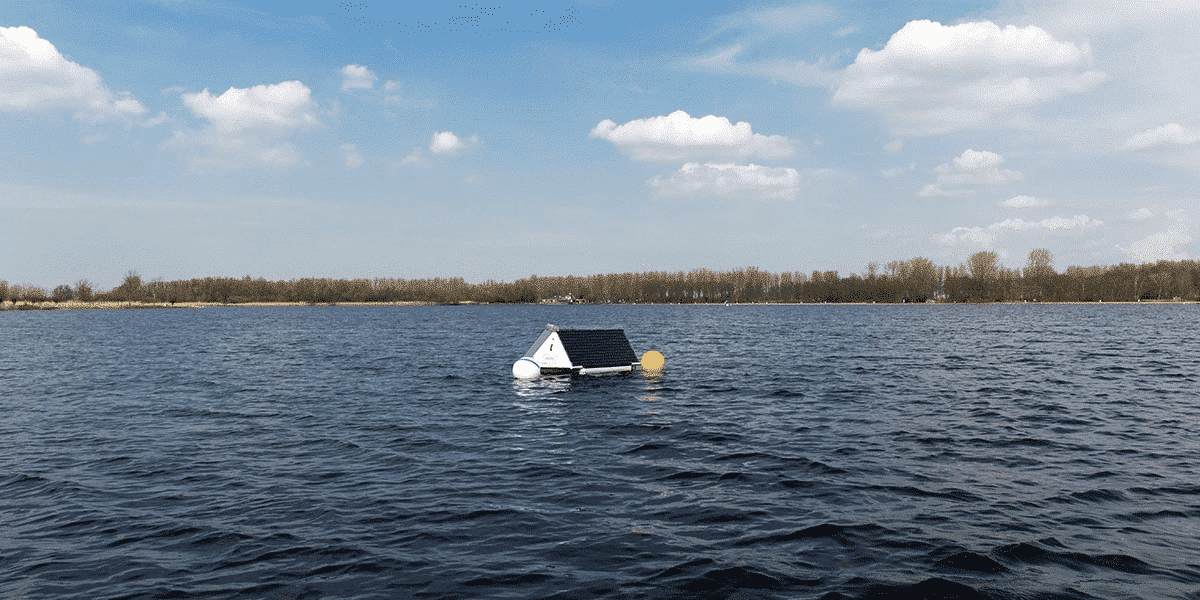
LG Sonic develops sustainable technology to control harmful algal blooms in lakes worldwide without the use of chemicals. Recent studies show that implementing this technology can reduce methane emissions from treated lakes by up to 20 percent, contributing directly to lower greenhouse gas levels and climate mitigation.
How Greenhouse Gases Trap Heat in the Earth’s Atmosphere
The Earth is warmed by sunlight, which heats the planet’s surface. This heat is then released as infrared radiation. Greenhouse gases absorb part of this outgoing heat energy and re-radiate it back toward the Earth’s surface, a process known as the greenhouse effect. Without greenhouse gases in the atmosphere, the average temperature of Earth’s surface would be approximately −18 °C instead of the current global average of around 15 °C.
Several gases contribute to this warming effect. Water vapor is the most abundant greenhouse gas and plays a major role in regulating Earth’s temperature. Carbon dioxide is the most significant greenhouse gas influenced by human activity, with atmospheric carbon dioxide concentrations increasing rapidly since the Industrial Revolution. Methane, nitrous oxide, and fluorinated gases occur in smaller quantities but have high global warming potential due to their ability to trap more heat per molecule.
Rising atmospheric concentrations of these gases increase radiative forcing, leading to higher global average temperatures and long-term changes in the Earth’s climate system. LG Sonic is Revolutionising Methane Emission Estimation
Methane as an Important Greenhouse Gas in Lakes
Among the major greenhouse gases, methane is particularly important due to its strong warming influence. Over a 100-year period, methane has a global warming potential approximately 34 times greater than carbon dioxide. Although its atmospheric lifetime is shorter than that of CO2, methane’s ability to trap heat makes it a powerful driver of near-term global warming.
In lakes and reservoirs, methane emissions are largely produced through natural processes in bottom sediments. When organic matter accumulates and oxygen levels decline, anaerobic bacteria break down this material and release methane gas. Algal blooms intensify this process by increasing organic loading and further reducing oxygen concentrations in the lower layers of the water column.
As methane accumulates in the water, it is eventually released into the atmosphere, contributing to increasing greenhouse gas concentrations and accelerating climate change.
The Link Between Algal Blooms, Carbon Dioxide, and Methane Emissions
Algae thrive in water bodies with abundant sunlight and nutrients. During growth phases, algae absorb atmospheric carbon dioxide through photosynthesis, temporarily reducing CO2 concentrations in surface waters. However, this short-term benefit is offset when algal cells die and sink.
As decomposing algae settle into sediments, bacteria consume the organic material, producing methane and carbon dioxide as byproducts of chemical reactions occurring under low-oxygen conditions. This shift transforms lakes into sources of greenhouse gas emissions rather than natural sinks.
As algal blooms become more frequent due to warming temperatures and nutrient enrichment, greenhouse gas emissions from lakes are expected to increase, reinforcing the warming effect on the Earth’s atmosphere.
Improving Greenhouse Gas Emissions Monitoring with Remote Sensing
Accurate estimation of greenhouse gas emissions is essential for understanding climate change impacts, supporting environmental protection efforts, and meeting regulatory requirements. Traditional measurement methods, such as field sampling and in-situ sensors, are often expensive and limited in spatial and temporal coverage.
To overcome these challenges, LG Sonic developed a remote sensing approach to estimate methane and carbon dioxide emissions from eutrophic water bodies using satellite data. This method enables large-scale assessment of greenhouse gas concentrations without the need for continuous on-site equipment and allows for the analysis of historical emission trends.
By improving access to emission data, this approach supports more informed decision-making in climate mitigation and ecosystem management.
Reducing Methane and Carbon Dioxide Emissions in a Drinking Water Reservoir
Rio Guandu is a major drinking water reservoir in Rio de Janeiro, supplying water to approximately nine million people. Persistent algal growth in the reservoir led to taste and odor problems caused by compounds such as geosmin, as well as increased greenhouse gas emissions.
In 2022, eight MPC-Buoy systems were installed to improve water quality and stabilise ecological conditions. Following implementation, water quality at the intake of the Guandu Water Treatment Plant improved significantly, eliminating taste and odor complaints and reducing the need for chemical treatment.
Activated carbon use was reduced by approximately 95 percent, while chlorine and aluminum sulfate consumption also declined. These operational improvements were accompanied by measurable environmental benefits.
Remote sensing analysis showed that methane and carbon dioxide emissions from the reservoir decreased by around 20 percent after installation. By improving oxygen conditions and limiting excessive algal growth, the technology reduced greenhouse gas emissions and contributed to lower atmospheric concentrations.
Measurable Climate Impact Through Greenhouse Gas Reduction
Reducing greenhouse gas emissions from lakes offers a tangible climate benefit. Approximately fifty trees are required to absorb one metric ton of carbon dioxide. The emission reductions achieved in Rio Guandu are equivalent to planting and maintaining hundreds of trees or offsetting hundreds of hours of passenger air travel.
These results demonstrate that managing algal blooms is not only essential for water quality and ecosystem health but also plays a role in mitigating climate change. By targeting methane emissions at their source, lake management strategies can contribute meaningfully to reducing global warming and protecting the Earth’s climate system.
Year | Oxidative CO2 Emission (Tons/Year) | Methane Diffusive Emission (Tons/Year) | Methane Ebullitive Emission (Tons/Year) | Total Methane Emission (Tons/Year) | Total CO2/year |
2019 | 1 | 4.57 | 0.4 | 4.97 | 124.25 |
2020 | 0 | 4.55 | 0.4 | 4.94 | 123.5 |
2021 | 0 | 4.47 | 0.39 | 4.86 | 121.5 |
2022 | 0 | 3.96 | 0.34 | 4.31 | 107.75 |
2023 | 0 | 3.73 | 0.32 | 4.06 | 101.5 |