

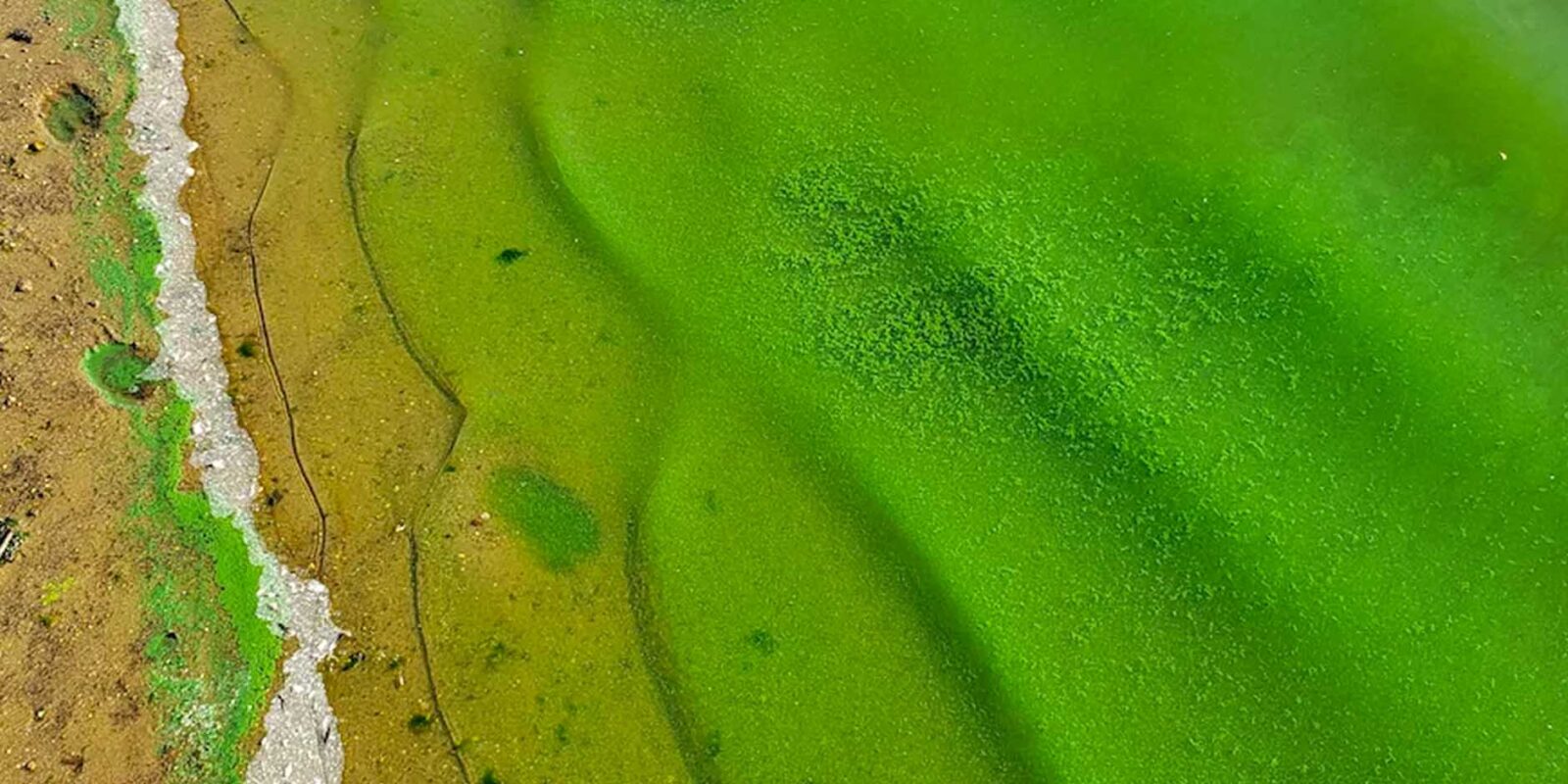
What is Nutrient Pollution?
According to NOAA, nutrient pollution occurs when too many nutrients, mainly nitrogen (N) and phosphorus (P), flow into water bodies and act like fertilizers, causing algae to grow excessively. This phenomenon is also known as eutrophication.
Many harmful algal blooms (HABs), or cyanobacterial HABs, are a result of increasing nutrient pollution from both point and nonpoint sources. The dramatic surge in nutrient flow from industrial, urban, and agricultural production activities accelerates the eutrophication of lakes, streams, and coastal waters.
Harmful algal species are quickly adapting to the growing nutrient loads. The timing, amount, and proportions of nutrients are the critical nutrient criteria contributing to the proliferation of HABs. The disbalance in nutrients accelerates the toxicity of diatoms and cyanobacterial HABs. Climate change with environmental and abiotic conditions due to human activities, also fuels the growth and spread of algae.
The main nutrients affecting the health of aquatic ecosystems are nitrogen and phosphorus. The natural biogeochemical cycles of nitrogen and phosphorus could be disrupted by increased effects brought on by climate change. Algae and aquatic plants rely on these nutrients to grow. Enough nitrogen and phosphorus support aquatic vegetation and provide food for aquatic animals, helping to maintain healthy aquatic ecosystems. However, excessive amounts of N and P trigger extreme HABs and lead to environmental problems.
What Causes Eutrophication?
The global production of phosphorus has increased 18 times since the 1940s. Meanwhile, the production of N grew over sixfold. It’s estimated that the annual flow of phosphorus enter aquatic systems has tripled, while total nitrogen has doubled. Monitoring total nitrogen and total phosphorus in water bodies is important for setting effective numeric criteria and water quality standards to control nutrient pollution from these two nutrients.
Nutrient pollution can occur due to land development, agriculture, aquaculture, and atmospheric nutrient deposition. These primary sources increase the amount, alter the proportions, and chemical forms of nutrients, and promote harmful algal blooms. Nonpoint source pollution, such as runoff from agricultural fields, stormwater runoff, and atmospheric deposition, are especially significant contributors to elevated nutrient levels in rivers and streams.
Main Sources Driving Nutrient Pollution
The growing human population intensifies food production and wastewater discharge from wastewater treatment facilities and septic tanks. These are the main contributors to global nutrient pollution. Major sources of nutrient pollution include agriculture, wastewater, fossil fuels, and stormwater runoff.
Agriculture
Crop production involves chemical fertilizer application or animal manure containing nitrogen and phosphorus. Fertilized soils and livestock operations release many nutrients into the air and waterways, making agriculture a major source of excess nitrogen and phosphorus loads.
Wastewater
Municipal sewer and septic systems often fail to remove the nitrogen and phosphorus from urban waste. Discharges of untreated or inadequately treated waste in the waterways increase nitrate and phosphorus pollution. Some detergents used for cleaning and laundry contain nitrogen and phosphorus. Garden fertilizers and inadequately disposed biowaste also encourage nutrient pollution.
Fossil fuels
Widely used for manufacturing, transportation, electricity generation, and agriculture. Release unprecedented amounts of nitrogen oxide emissions into the air. A big part of it pollutes our water bodies. Additionally, industrial operations, airplanes, ships, road vehicles, and coal power plants are significant sources of nitrogen pollution.
Stormwater runoff
Rain and snow runoff from roofs, roads, and pavements also carries nitrogen and phosphorus into local waters. Urban sources, such as runoff from cities, are significant contributors to nutrient pollution. When precipitation falls during wet weather, it generates runoff that transports nitrogen and phosphorus into waterways.
What Are The Effects of Nutrient Pollution and Harmful Algal Blooms?
The human-caused enrichment of water with nutrients contributes to the process of eutrophication, a major challenging environmental problem. It accelerates the growth of algae and other aquatic life, disturbing the natural balance of aquatic ecosystems and deteriorating water quality. This excess nutrient pollution, mainly nitrogen and phosphorus, dramatically alters food webs in lakes, rivers, and coastal ecosystems.
Changes in algae growth impact food resources for fish, shellfish, and other aquatic organisms, affecting commercial fishing and aquatic life. Maintaining balanced nutrient levels is essential to support aquatic life and prevent ecosystem collapse. As a result, these systems become dominated by phytoplankton, while benthic microalgal and macrophyte production decreases, which can be critical for fish survival.
In lakes, eutrophication creates hypoxia and biodiversity loss due to low dissolved oxygen, a condition addressed by total maximum daily loads (TMDLs) to limit nutrient inputs. It also promotes the proliferation of harmful algal blooms (HABs). Toxins produced by HABs can threaten human health by contaminating drinking water and causing illness. Lake eutrophication further increases emissions of greenhouse gases, methane, and nitrous oxide, contributing to global climate change and impacting the environment.
Nutrient pollution causing blooms at your reservoir?
Water utilities use LG Sonic’s MPC-Buoy to monitor phosphorus and nitrogen in real time and suppress algal growth before blooms escalate — no chemicals, no permits, no downtime.
Economic Costs
The economic losses resulting from nutrient pollution and eutrophication are overwhelming. Eutrophication increases the costs of water purification for municipal and industrial use. Loss of fish and wildlife can compromise the food supply for people and animals. Toxic algae and “dead zones” cause losses of hundreds of millions of dollars for the aquaculture industry. The recreational value of water bodies falls, damaging the hospitality and tourism industry.
The complexity and diversity of the eutrophication effects make it difficult to get a precise cost estimate. Eutrophication of European coastal waters is estimated at over $1 billion per year. For the United States, eutrophication of lakes and streams costs over $2.4 billion annually. These include the loss of lake-front property value (49%) and losses from recreation (24%). The taste and odor problems caused by eutrophication and HABs growth lead to costs for buying bottled water (25%). The costs of endangered species protection were estimated at 2% of total losses. The lack of algae control in drinking water reservoirs and “dead zone” with low oxygen levels results in considerable public health and wildlife losses, highlighting the need to address nutrient pollution through effective nutrient standards and management programs.
How Anglian Water tackled algal blooms from nutrient loading
Persistent cyanobacteria blooms were straining Alton Water’s treatment works — serving 92,000+ properties. See how ultrasonic treatment reduced bloom pressure without chemicals or operational downtime.
What are the solutions to reduce nutrient pollution?
Combating eutrophication requires a combination of comprehensive control and preventative measures. Governments, businesses, and individuals must take urgent actions to reduce nutrient pollution and address nutrient pollution effectively. Key strategies involve controlling nutrient pollutant sources and restoring damaged ecosystems. Effective solutions must address more nutrients, specifically both nitrogen and phosphorus pollution, to achieve lasting improvements in water quality and aquatic ecosystems.
Controlling The Nutrient Flow
Governments focus their efforts mostly on controlling pollution from the point sources. Efforts to control point sources have proved successful for developed countries. Banning phosphorus from laundry detergents and removing it from sewage effluent are both efficient control strategies. Yet, developing countries have either minimal nutrient removal technologies or none at all.
Water quality remains very low, and harmful algal blooms continue to occur. This is due to the nonpoint source pollution loading of nutrients and atmospheric deposition. Controlling nonpoint pollution from sources like agriculture is much more challenging. The main difficulty is that the sources are very diverse and dispersed. Land use management, landscape management, and water management practices must be upgraded to reduce nutrient runoff and nutrient losses through leaching. Individuals can also contribute. For example, choosing phosphate-free cleaning and laundry detergents, soaps, and shampoos helps reduce nutrient pollution. Conserving energy in the household helps minimize airborne nutrient pollution from fossil fuels. This includes using energy-efficient domestic equipment and green building design.
Community Involvement in Tackling Nutrient Pollution
Community involvement is essential for reducing nutrient pollution and safeguarding the health of aquatic ecosystems and human communities. The Environmental Protection Agency (EPA) from Silver Spring underscores the critical role that local action plays in addressing excess nutrients, mainly nitrogen and phosphorus, that threaten water bodies across the country. When communities come together, they can significantly reduce nutrient runoff, prevent harmful algal blooms, and protect the water quality of local waterways.
One of the most effective ways for communities to make a difference is by participating in regional initiatives, such as the Chesapeake Bay Program. This collaborative effort brings together residents, local governments, and organizations to reduce nitrogen and phosphorus pollution in the Chesapeake Bay, one of the nation’s most important aquatic resources. Supporting upgrades to wastewater treatment facilities is another impactful step, as these facilities are responsible for treating large quantities of human waste and can greatly reduce nutrient discharge into rivers, lakes, and coastal waters.
Individual actions to reduce nutrient pollution
On an individual level, properly disposing of pet waste and choosing environmentally friendly household cleaners also help prevent nutrient runoff and phosphorus pollution from entering water bodies. In addition, maintaining septic tanks so they operate properly is crucial for preventing leaks of nitrogen and phosphorus into ground water and surface waters.
Planting vegetation along waterways, supporting wetland restoration, and promoting sustainable gardening practices all help absorb excess nutrients and reduce runoff. In urban areas, installing green infrastructure, such as rain gardens and permeable pavements, can further limit nutrient pollution from stormwater. The National Ocean Service and the Environmental Protection Agency provide valuable resources and fact sheets to help communities understand the sources of nutrient pollution, including fossil fuels, urban areas, and agricultural activities, and to develop effective strategies for reducing nutrient loads through nutrient trading and other approaches.
How To Restore Aquatic Ecosystems?
Studies show that controlling external nutrient sources doesn’t always decrease the nutrient loads and, therefore, harmful algal blooms in water bodies. Lakes seem to respond slowly to nutrient control interventions. This is because the excess nutrients remain in deposits for the long term. They replenish algal blooms and trigger further eutrophication, worsening water pollution. Ecosystem restoration includes rehabilitating damaged aquatic ecosystems. The biological, physical, and chemical functions and properties of water bodies are then recovered. Lake rehabilitation and restoration strategies aim to reduce the phosphorus pollution from the water. A common approach is to trap and remove phosphorus from the system. Physicochemical methods like ferric dosing can achieve this. It involves adding ferric sulfate.
Physico-mechanical methods like flushing and dredging of floor deposits can help reduce phosphorus concentrations. However, these methods may disrupt the natural balance of aquatic ecosystems. These solutions are temporary. As soon as the intervention stops, levels go back to the former value. A more efficient restoration method controls algal growth, preventing further accumulation of nutrients in the deposits. The primary algae control methods include chemical control, aeration, mixing, and ultrasound. The ultrasonic algae control technology is considered the safest and most environmentally-friendly solution for eutrophication. It’s safe for fish, plants, and other aquatic organisms, and can be used for lakes and drinking water reservoirs.
Deployed at 500+ water bodies worldwide
Ready to tackle nutrient pollution at your site?
Our water quality engineers work with drinking water utilities, irrigation operators, and industrial water managers to design the right algae control solution for your specific challenge.
|
95%
algae reduction
|
10K+
deployments WORLDWIDE
|
0
chemicals used
|