

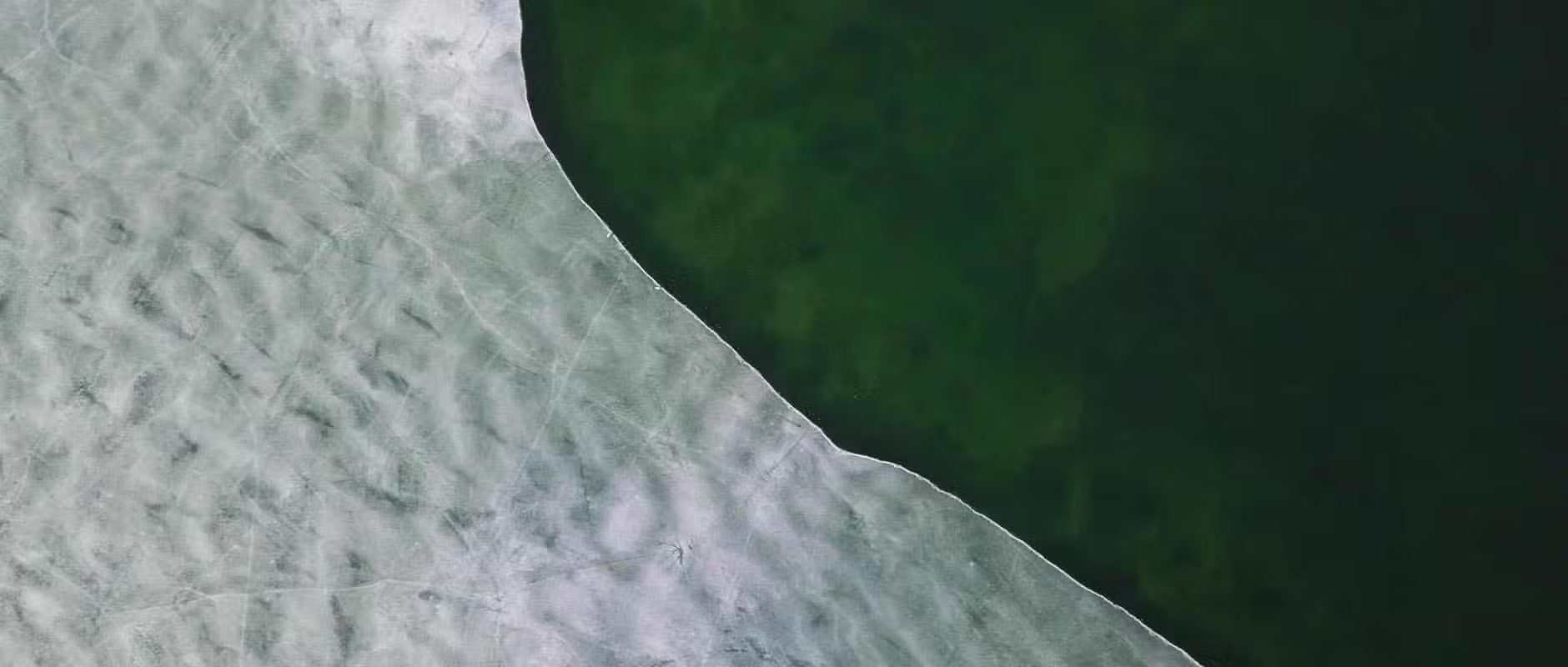
If you’ve read any of our blogs, you already know the plethora of negative impacts of harmful algal blooms (HABs). From depleted oxygen levels to fish kills, and from skin irritations to liver damage, the consequences of these harmful algae blooms are well-documented.
But when we think of harmful algal blooms (HABs), we typically imagine warm weather and stagnant water, with greenish-blue scum covering the surface of lakes, ponds, and rivers. The truth is, this mental image is wrong, and these algae blooms can happen in a variety of environmental conditions, including during winter and in cold regions, according to new research. Algal blooms are not only a warm-weather phenomenon, but rather a year-round serious threat to aquatic ecosystems and human health. Understanding how harmful algae blooms can develop in colder climates is crucial to mitigating their impact and protecting our natural water bodies and resources.
In this article, we will explore the phenomenon of cold-weather algal blooms, including their causes, frequency, and potential impacts on aquatic life and human and animal illnesses.
How frequent are cold algae blooms?
The article previously cited provides insights into the occurrence of cold-weather algal blooms. According to the study, there have been 37 confirmed blooms that have taken place in cold conditions, out of which 19 have occurred during ice-covered conditions. These blue-green algae blooms have been primarily reported in North America and Europe, although it is likely that this is due to higher monitoring and algae resources in these regions.
Although the frequency of cold-weather algal blooms is not yet fully understood, the study suggests that harmful algal blooms occur more commonly than previously thought. With the increasing impact of climate change on aquatic ecosystems, it is likely that the occurrence of these blooms will increase in colder regions. Therefore, it is crucial to understand the underlying environmental factors and excess nutrients that contribute to these blooms and their potential impact on the environment.
Several factors can contribute to the formation of cold-weather algal blooms, such as light availability, nutrient levels, and temperature fluctuations. The study highlights that while these blooms may occur in any season, they tend to be more prevalent during winter and early fall. This is because the water column becomes more stable during this period, resulting in the accumulation of nutrients at the bottom of the water column. As a result, when the water temperature begins to rise in the spring, the nutrient-rich water at the bottom mixes with the surface water, creating ideal conditions for algae growth and the rapid increase of microscopic organisms that produce toxins.
What types are there?
Several types of cold-water cyanobacterial blooms have been identified, each with its own mode of development. Winter blooms are one type of cold-water bloom that develops beneath the ice cover in freshwater and marine systems, including brackish water. The accumulation of excessive nutrients and organic matter beneath the ice serves as a source of food for the algae, leading to their proliferation and toxin production. In some cases, winter blooms can persist even after the ice has melted, leading to continued growth and the potential for long-term impacts on aquatic ecosystems and health effects on animals and people.
Another type of cold-water cyanobacterial bloom is the spring bloom, which occurs when the ice cover begins to melt, and light penetrates the water surface. As the water warms up and stratifies, nutrients become more available to the algae, leading to their rapid growth and proliferation. Spring blooms can be particularly problematic in shallow water systems, where they can reduce light penetration and dissolved oxygen, leading to the growth of nuisance macroalgae and other undesirable vegetation.
Finally, glacier-fed blooms are a type of cold-water bloom that occurs in high-latitude and high-altitude lakes that are fed by glaciers. The meltwater from glaciers contains high concentrations of nutrients, which fuel the growth of cyanobacteria. Glacier-fed blooms are a growing concern because of climate change, which is causing glaciers to melt at an unprecedented rate. As glaciers continue to retreat, the frequency and intensity of glacier-fed blooms are likely to increase, posing significant challenges for aquatic system management and increasing the risk of harmful effects such as fish kills and contamination of drinking water.
How do they start?
Based on observations and knowledge of bloom-forming processes and winter/spring limnology, there are three proposed origins of cold-water cyanobacterial blooms. These harmful algal blooms can occur separately, sequentially, or simultaneously and can last for extended periods.
The first type of development is surface cyanobacterial blooms that start in cold water temperatures. They can occur in a wide range of light, temperature, and nutrient conditions, and are formed through physiological adaptations and slow biomass accumulation under suboptimal growth conditions. Physical drivers, such as upwelling and mixing events, may also promote blooms when water temperatures are cold.
The second type is cold-water cyanobacterial blooms that start in the metalimnion, which can exist as metalimnetic (beneath the first layer of water) blooms or deep chlorophyll layers (DCLs) blooms. These blooms can directly emerge from deep, relatively cool waters into the lake surface due to strong physical dynamics. They are often overlooked in cyanobacterial bloom reporting and may be brought to the surface, increasing the likelihood of human and wildlife contact with contaminated water.
Lastly, some blooms may start in warmer water temperatures and persist into the fall and winter or as temperatures increase into spring. These blooms may be dependent on various biological or physicochemical conditions, and understanding their endurance in cold water temperatures is important in understanding their formation, persistence, senescence, and management.
Algae blooms adaptations to cold weather
How do algae get away with not only surviving during almost freezing weather but thriving to the point of throwing off ecosystem balance? They have a set of very specific adaptations that allow them to outcompete other algal species less adapted to cold weather.
During winter months, light is often a limiting factor for phytoplankton growth, as the photoperiod is shorter. Cyanobacteria, known as blue-green algae, have several adaptations that enable survival and growth during low-light conditions. One such adaptation, practiced by the well-known Spirulina genus, is the ability to shift from a photochemically active state to a heterotrophic state adapted to low light, where they consume other organisms or organic matter in their environment, a process known as mixotrophy.
Cyanobacteria can also optimize their light absorption efficiency and photosynthetic capacity by increasing their pigment packing and chlorophyll a (Chl a) content. This maximizes the use of available light for photosynthesis. Additionally, some cyanobacteria can shift their light absorption towards the blue end of the spectrum, which is more available during winter months when the angle of incidence of sunlight is lower.
In addition to these adaptations for low-light conditions, cyanobacteria have also evolved survival mechanisms for cold temperatures, including the development of more fluid biological membranes through the accumulation of polyunsaturated fatty acid acyl chains. This allows the membranes to remain flexible and functional at lower temperatures. Cyanobacteria can also produce antifreeze and cold shock proteins that protect them from the damaging effects of ice crystal formation at very cold temperatures.
Moreover, some cyanobacteria, such as Limnothrix redekei and Pseudanabaena limnetica, can actively grow at relatively low temperatures when light or nutrient conditions are favorable, even in nutrient-rich or polluted runoff environments. This ability allows for the accumulation and aggregation of biomass, potentially resulting in cold-water cyanobacterial blooms.
Managing a water body where blooms persist outside the summer season?
Cyanobacteria’s cold-weather adaptations mean bloom management cannot be switched off in autumn and back on in spring. Year-round monitoring and prevention keep water quality stable through transitions — the periods when under-ice nutrient accumulation creates the conditions for the next bloom.
Case study: Red tides in Florida
An illustrative instance of the destructive impact of cold-water blooms is the ongoing “red tide” that has been afflicting Florida since October 2022. While red tides can occur throughout the year, they are more common during the colder months from October to February, when warm temperatures are less prevalent but still influence bloom dynamics.
During this time, the Gulf of Mexico experiences colder temperatures, which can trigger an upwelling of nutrients from deeper waters, providing the ideal conditions for the culprit, Karenia brevis, to thrive. Additionally, winter winds and currents can also cause the algae to accumulate near the shore, resulting in high concentrations that can be toxic to marine life and humans, leading to fish kills and other health impacts.
This is having devastating effects on marine ecosystems, as it can lead to the death of fish, sea turtles, manatees, and other animals sickened by algal toxins. In addition, the toxins produced can cause respiratory problems in humans simply going for a walk on the beach, such as coughing, wheezing, and shortness of breath, especially for those with pre-existing respiratory conditions or skin contact with smelly water.
The Florida red tide is similar to other cold-water blooms in that they are both fueled by the availability of nutrients and colder temperatures. However, the Florida red tide is unique in that it is caused by a specific species of dinoflagellate, Karenia brevis, rather than freshwater cyanobacteria. Unlike most cold-weather blooms documented in the research, red tide is saltwater-based, but the management challenge is shared: toxins that persist, ecosystems under stress, and communities caught without warning. Understanding that blooms of all kinds are no longer confined to warm months is the first step toward year-round preparedness.
Chemical-free algae management in 55+ countries
Blooms don’t stop for winter — management shouldn’t either
As climate change extends bloom seasons into colder months, the assumption that algae are a summer problem is becoming operationally dangerous. Year-round real-time monitoring gives water managers the data to act — whatever the season.