

Summary
Taste and odor in drinking water are among the most common — and most frustrating — consumer issues water utilities face. They are caused by geosmin and MIB, natural compounds produced by algae in source water reservoirs, and they are notoriously difficult to fully remove once they enter the treatment system. This page explains why, and what utilities are doing differently.
Are residents complaining about an earthy or musty taste in their tap water?
Facing seasonal taste and odor complaints in your water supply — year after year?
The problem is likely developing in your source water, not inside the treatment plant.
Common signs of a taste and odor problem in your water supply:
- Earthy or musty taste in tap water, especially in summer and early autumn
- Swampy or mold-like smell at the tap or in consumer reports
- Seasonal complaint spikes during warm periods or reservoir turnover
- Activated carbon doses are rising at the treatment plant, with diminishing results
- Consumers say filtered or bottled water tastes better than the tap
Taste and odor in drinking water rank among the most common consumer concerns for water utilities worldwide. The problem is persistent. It is seasonal. And it is often impossible to fully resolve at the treatment plant alone.
Taste and odor in drinking water are typically caused by geosmin and MIB (methylisoborneol). These naturally occurring compounds come from algae and cyanobacteria in source water. They pose no health risk, but humans detect them at extremely low concentrations — making them a major challenge for water utilities.
This page covers what causes taste and odor in drinking water, why conventional treatment often falls short, and how water utilities are moving to a preventive approach at the source.
Humans detect geosmin at concentrations as low as 5 nanograms per liter. That threshold sits far below what most treatment processes can reliably reach. Taste and odor complaints consistently rank among the top consumer issues for drinking water utilities — even when water meets all regulatory safety standards.
What Causes Taste and Odor in Drinking Water?
Taste and odor in drinking water is caused by naturally occurring organic compounds produced by algae, cyanobacteria (blue-green algae), and certain bacteria in source water bodies such as reservoirs, lakes, and river intakes. The two most prevalent compounds are:
- Geosmin produces the earthy, muddy smell that drives most consumer complaints. Cyanobacteria and actinobacteria generate it. Humans detect it at 5 nanograms per liter.
- MIB (methylisoborneol) produces a musty or camphor-like odor. Cyanobacteria also produce it. Like geosmin, it persists through many treatment processes.
Neither compound is hazardous at drinking water concentrations. But both are so potent at the sensory level that even trace amounts produce a noticeable musty smell or earthy taste in tap water. Consumer complaints and lost trust in the water supply follow quickly.
The bottom line: taste and odor come from biological activity in the source water. Prevention at the source is more effective than adding treatment downstream.

When Do Taste and Odor Problems in Drinking Water Occur?
Taste and odor events follow predictable seasonal patterns. Their severity varies year to year, but their timing does not.
Four conditions drive most events:
- Warm water temperatures in summer and early autumn speed up cyanobacterial growth and compound production.
- Thermal stratification concentrates algae near the surface where light and nutrients are abundant.
- Seasonal turnover mixes stratified layers in autumn. This releases compounds that accumulated in deeper, oxygen-depleted water.
- Nutrient loading from agricultural runoff and urban stormwater feeds the algal growth that drives compound production.
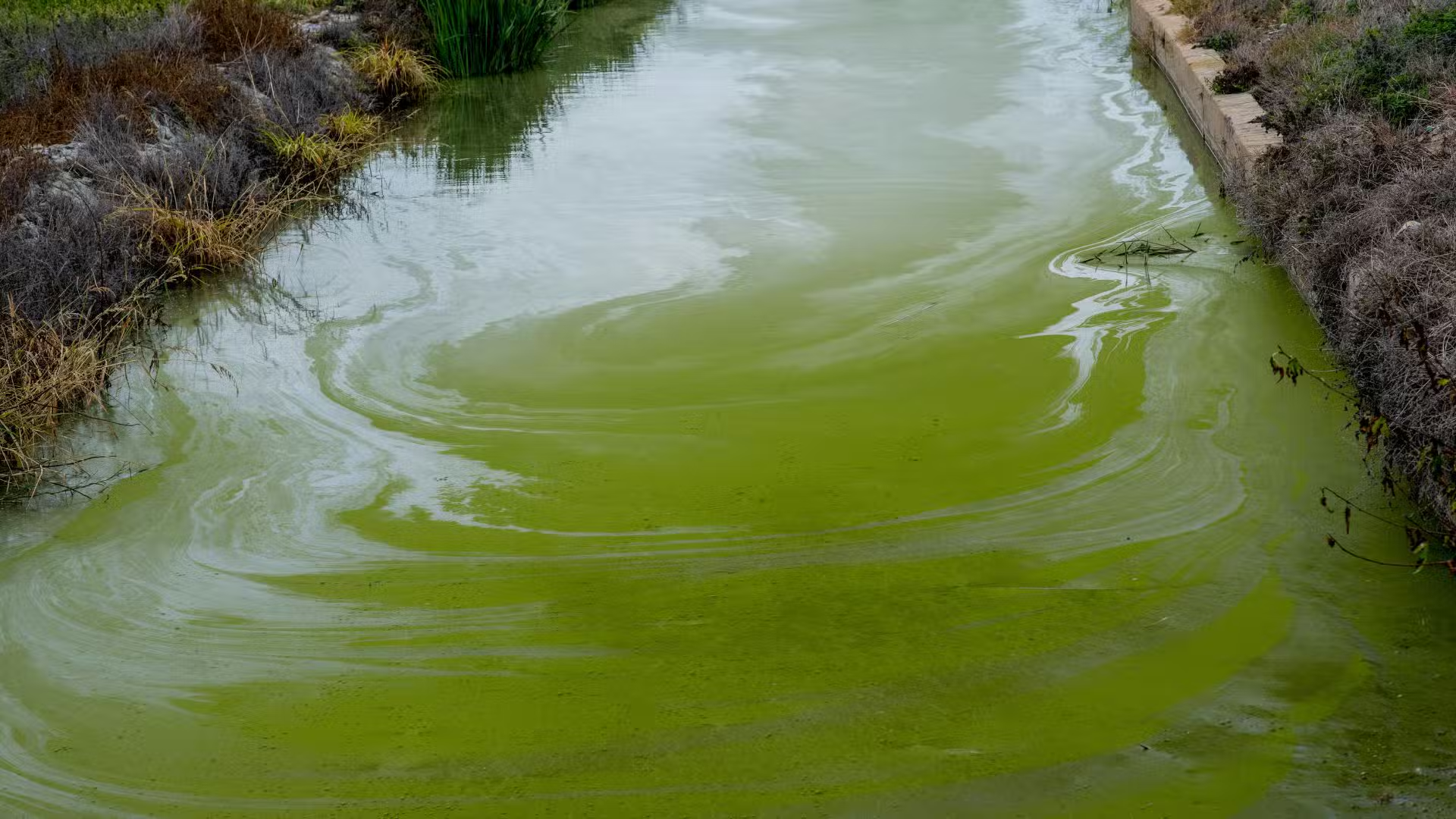
The cause-and-effect chain is direct. A bloom develops in the reservoir. Cyanobacteria produce geosmin and MIB. Cells die or break down and release the compounds. The intake draws them into the treatment system. Treatment struggles to remove them before water reaches consumers.
Most utilities see taste and odor problems recur in the same seasonal windows each year. That means they are predictable — and anticipation is possible.

Is Water with an Earthy or Musty Taste Safe to Drink?
In most cases, yes. A musty smell or earthy taste in tap water is an aesthetic issue, not a health hazard. Geosmin and MIB are not toxic at drinking water concentrations. Their presence does not signal microbial contamination or a compliance failure.
The consumer perception problem is significant, however. Research consistently links taste and odor complaints to people switching from tap water to bottled alternatives. That erodes utility credibility and revenue — even when the water meets all safety standards.
One important exception: some taste and odor events coincide with broader cyanobacterial blooms that also produce cyanotoxins. In those cases, utilities need a full health risk assessment. For most earthy or musty taste complaints, though, the issue is aesthetics and consumer confidence.
What Are Geosmin and MIB, and Why Are They Hard to Remove?
Geosmin and MIB are secondary metabolites — byproducts of normal biological activity in aquatic organisms. They do not enter the water from outside. They originate within the water body itself, which is what makes conventional treatment alone so difficult.
When algae cells break down, they release geosmin and MIB directly into the water column. The higher the bloom biomass in the source water, the greater the compound load entering the treatment system — and the harder full removal becomes.
Both compounds are semi-volatile, low-molecular-weight organic molecules. This chemical profile resists most conventional treatment processes:
- Coagulation and flocculation remove particles and suspended solids. They do not target dissolved organic compounds like geosmin and MIB.
- Chlorination has a limited effect on these compounds. It can also generate additional taste and odor by-products.
- Ozonation works better than chlorination, but requires significant infrastructure and is not always available.
- Activated carbon is the most widely used response — but with critical operational limitations (see below).
Why Is Taste and Odor So Difficult to Remove at the Treatment Plant?
Activated carbon — in powdered (PAC) or granular (GAC) form — is the standard response for most utilities managing taste and odor in drinking water. It can adsorb geosmin and MIB effectively under controlled conditions. But one fundamental limitation changes everything:
Key limitation:
Advanced treatment processes cannot always fully remove geosmin and MIB once concentrations spike in source water. Activated carbon responds to a problem that has already entered the treatment system. It does not prevent it. Prevention at the source is more effective than treatment at the plant.
Approach | Where it works | Limitation |
Activated Carbon | Treatment plant | Reactive, incomplete removal |
Ozonation | Treatment plant | High cost, infrastructure heavy |
Source prevention | Reservoir | Prevents compound formation |
During peak bloom periods, geosmin and MIB concentrations can exceed what activated carbon dosing can control. This is especially true given the extremely low detection thresholds for these compounds. A treatment step that reduces geosmin from 200 ng/L to 15 ng/L still produces water that many consumers identify by its musty smell or earthy taste.
Operational challenges compound the problem:
- Bloom intensification is hard to predict, so dosing stays reactive rather than anticipatory.
- Powdered activated carbon costs rise sharply during extended or severe bloom periods.
- Granular activated carbon exhaustion cycles rarely align with seasonal bloom timing.
- Regulatory constraints slow emergency increases in chemical dosing.
Activated carbon reduces taste and odor compounds during treatment. It does not prevent their formation in the source water. This distinction explains why source prevention is a more durable strategy for utilities facing recurring problems. For further background, the WHO Guidelines for Drinking-water Quality address taste and odor as an aesthetic parameter alongside guidance on cyanobacteria management.
How Gainesville eliminated seasonal taste and odor complaints from Lake Sidney Lanier
Recurring geosmin and MIB events were driving consumer complaints every summer. Rather than increasing activated carbon doses, Gainesville deployed MPC-Buoys to suppress cyanobacterial growth at the source — before compounds reached the intake.
How to Prevent Taste and Odor Problems in Source Water
The most effective approach is prevention at the source. Stop geosmin and MIB from forming in significant quantities in the reservoir before they reach the treatment intake.
Source water management strategies for taste and odor prevention include:
- Reservoir destratification — disrupting thermal stratification to reduce conditions that favour cyanobacterial dominance
- Nutrient load reduction — managing nitrogen and phosphorus inputs from agricultural and urban runoff
- Selective intake withdrawal — drawing water from depths where algae concentrations are lower
- Real-time water quality monitoring — tracking chlorophyll-a, temperature, and dissolved oxygen to enable early intervention
- Ultrasonic algae control — suppressing cyanobacterial growth using targeted sound waves, without chemicals
Ultrasonic technology addresses taste and odor at the point of origin. It does not treat symptoms downstream. Instead, it disrupts the conditions under which geosmin and MIB-producing organisms thrive. Algal biomass and biological activity decline before compounds reach the intake.
LG Sonic’s position: We do not treat taste and odor — we prevent the formation of taste and odor compounds at the source.
The MPC-Buoy combines continuous real-time water quality monitoring with chemical-free ultrasonic algae control. Utilities manage source water conditions before bloom events escalate into treatment challenges.
Still managing taste and odor at the treatment plant?
The MPC-Buoy monitors chlorophyll-a, temperature, and dissolved oxygen in real time, and uses targeted ultrasound to suppress cyanobacterial growth before geosmin and MIB reach your intake — no chemicals, no compliance risk.
Can Taste and Odor Problems Be Predicted?
Yes — with monitoring in place. Taste and odor events are not random. Identifiable environmental conditions drive them. Those conditions follow seasonal patterns that repeat year after year in the same reservoir.
Key early-warning indicators include:
- Rising chlorophyll a — a proxy for increasing algal biomass
- Surface temperatures approaching or exceeding 20°C, which favour cyanobacterial growth
- Declining dissolved oxygen in deeper layers, signalling stratification and anaerobic build-up
- Elevated phosphorus or nitrogen following rain events or seasonal runoff
- Historical pattern data showing when taste and odor events occurred in previous years
Continuous sensor monitoring integrated with an algae control system allows utilities to shift from crisis management to proactive source water quality control. When monitoring detects conditions that typically precede a bloom, intervention starts before geosmin and MIB reach critical levels.
This predictive capability is one of the strongest operational advantages of combining real-time water quality data with source-level algae management.
How Utilities Prevent Taste and Odor Before It Reaches the Plant
Lake Sidney Lanier, Georgia — Gainesville Utilities
Gainesville’s water supply from Lake Sidney Lanier was experiencing recurring taste and odor events driven by seasonal cyanobacterial blooms. Rather than expanding treatment capacity, the utility deployed MPC-Buoys across the intake area to suppress algal growth using chemical-free ultrasonic technology.
The results demonstrated how source water management can reduce the treatment burden and deliver more consistent water quality throughout the year.
Read the full Gainesville case study →
Johnstown — Cutting Taste and Odor Compounds with Ultrasound
At Johnstown, ultrasonic technology was deployed to directly address elevated geosmin and MIB concentrations in source water. Integrated with continuous water quality monitoring, the system enabled the utility to stay ahead of taste and odor events rather than responding after consumer complaints had already emerged.
Read the Johnstown case study →
Berthoud, Colorado — Source Water Algae Control
At Berthoud, source water quality improved measurably following MPC-Buoy deployment, reducing the algal biomass responsible for taste and odor compound production. The utility achieved more predictable water quality conditions and reduced reliance on reactive treatment measures.
Read the Berthoud case study →
Frequently Asked Questions
What causes taste and odor in drinking water?
Geosmin and MIB cause most taste and odor problems in drinking water. Cyanobacteria and other microorganisms in lakes, reservoirs, and river intakes produce both compounds naturally. They are not harmful at drinking water concentrations. But humans detect them at extremely low levels — as low as 5 ng/L for geosmin — making them a persistent challenge for water utilities.
Why does my tap water taste earthy or musty?
An earthy taste or musty smell in tap water almost always traces back to geosmin. Cyanobacteria in the source water reservoir or lake produce it. Geosmin is detectable at vanishingly low concentrations. Water can pass all safety standards and still carry a noticeable earthy taste if source water levels are elevated. The water is safe to drink, but the sensory experience is unpleasant.
Is water with a musty smell or earthy taste safe to drink?
In most cases, yes. An earthy or musty taste in tap water is typically an aesthetic issue. Geosmin and MIB are not toxic at drinking water concentrations. One exception: taste and odor events that coincide with visible cyanobacterial blooms producing cyanotoxins require a separate health risk assessment.
When do taste and odor problems occur most often?
Taste and odor events in drinking water are most common in warm summer months and early autumn. Cyanobacterial growth accelerates as water temperatures rise. Events also occur during reservoir turnover, when stratified layers mix and release accumulated compounds. Periods of elevated nutrient loading from runoff increase the risk further. Most reservoirs show a predictable seasonal pattern.
Why is taste and odor difficult to remove during water treatment?
Geosmin and MIB resist many standard treatment processes. Activated carbon is the most common response, but it is reactive. It reduces compounds after they enter the treatment system. During severe or prolonged bloom events, source water concentrations can exceed what activated carbon dosing can control. Treatment plants often cannot fully remove MIB and geosmin once a major event is underway.
Can taste and odor problems be predicted?
Yes. Water temperature, stratification, nutrient levels, and algal biomass all indicate rising risk. Monitoring can track these conditions in real time. Most reservoirs also show seasonal patterns that repeat year after year. With continuous monitoring and a source water management strategy in place, utilities can detect early-warning indicators and intervene before conditions escalate. Prediction is not just possible — it is the foundation of an effective prevention strategy.
How can taste and odor problems be prevented in source water?
The most effective approach is to stop geosmin and MIB from forming in significant quantities. Control the algae and cyanobacteria that produce them. Source-level strategies include ultrasonic algae control, reservoir destratification, nutrient load management, and real-time water quality monitoring. Reducing algal biomass in the source water reduces the compound load entering the treatment system. Treatment becomes more effective, and consumer complaints become less frequent.
Assess Your Reservoir’s Taste and Odor Risk
If your utility faces recurring taste and odor complaints, the underlying issue is likely already developing in your source water. Seasonal algal bloom activity builds before it reaches the intake. Conventional treatment was not designed to prevent it.
Every reservoir is different. Timing and severity depend on your specific mix of nutrient loading, thermal stratification, seasonal patterns, and local biology. A tailored assessment identifies when and where your source water is most vulnerable — and which intervention approach fits your situation best.
Protecting drinking water for 200 million people across 60+ countries
Stop taste and odor at the source before it reaches your plant
Our water quality engineers help drinking water utilities design source-level algae control programs that reduce geosmin and MIB formation before compounds enter the treatment system.
|
95%
algae reduction
|
10K+
deployments WORLDWIDE
|
0
chemicals used
|