

In short
- Know the chemistry of your water body;
- Keep your aquatic ecosystem healthy;
- Monitor key water parameters in real-time.

Why summer is the highest-risk season for algal blooms
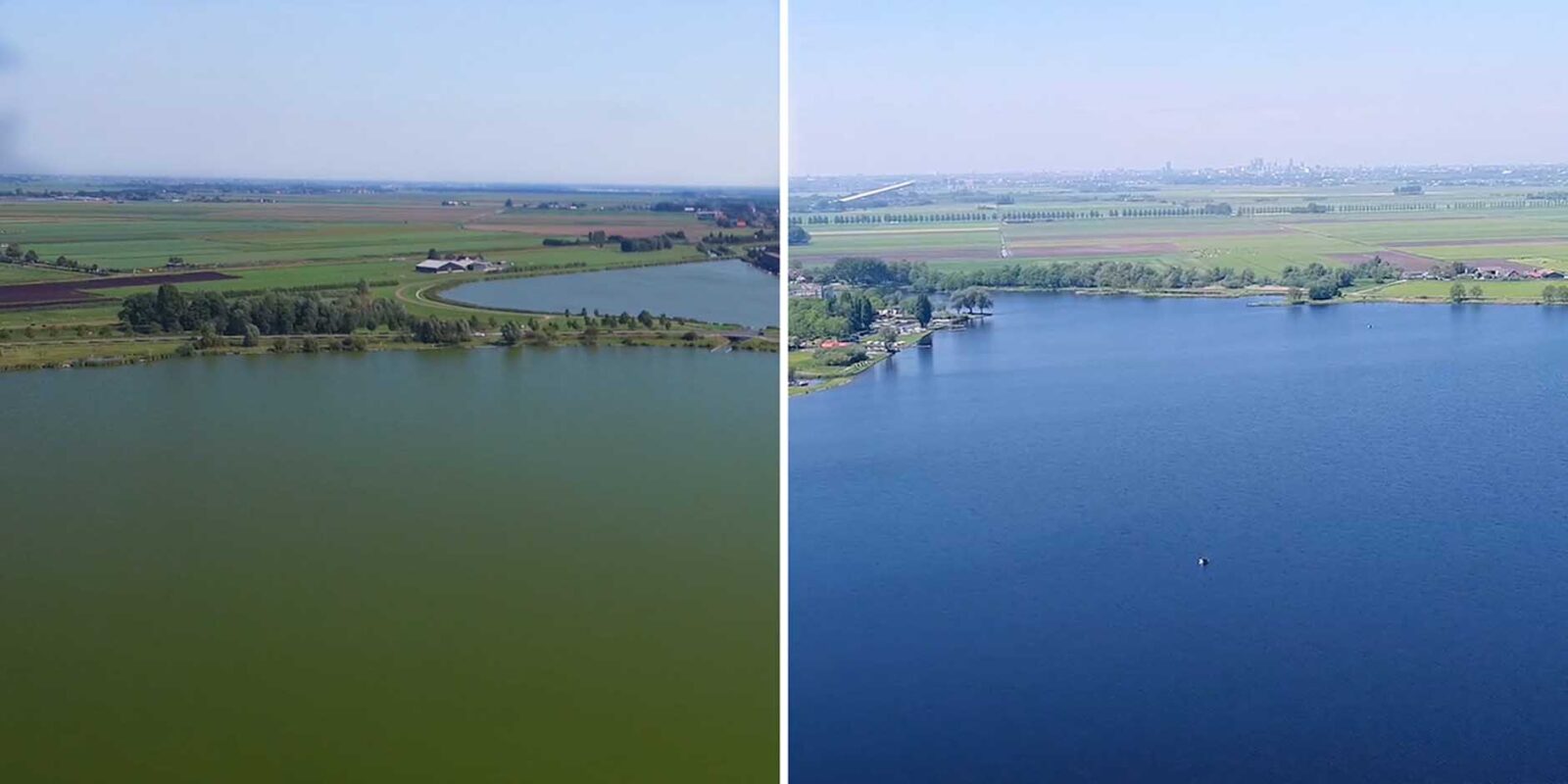
Warmer temperatures increase both the occurrence and severity of harmful algal blooms. In summer, surface water temperatures rise, thermal stratification intensifies, and nutrient concentrations shift — creating near-ideal conditions for cyanobacteria to outcompete other organisms and form surface scums. It’s estimated that approximately 30 to 48 million Americans get their drinking water from lakes and reservoirs that could occasionally contain algal toxins.
The consequences for water utilities are well documented. In 2014, nearly 500,000 people in Toledo, Ohio, were unable to use tap water for almost three days after algal toxins from Lake Erie contaminated the drinking water supply. Treatment processes can remove many algal toxins, but not every facility can eliminate all harmful compounds under bloom conditions — and the operational disruption alone carries a high cost.
With climate change extending warm seasons and intensifying stratification events, proactive summer preparation is increasingly a baseline operational requirement, not an optional measure. Typically, treatment processes could remove these toxins. Still, not every treatment facility can eliminate all harmful compounds. Water quality degrades, public health is threatened, and treatment plants may be disrupted or even shut down.
Just like in 2014, when nearly 500,000 people living in Toledo, Ohio, couldn’t drink, cook, or bathe for almost three days due to algal toxin contamination in Lake Erie. As temperatures increase, so, too, do the occurrence and severity of these blooms.
#1: Understand the chemistry of your water body
Every water body is different. Lakes and reservoirs vary in depth, surface area, catchment type, retention time, and the mix of nutrient inputs they receive. A management approach that works for one reservoir may be ineffective for another. The chemistry of a lake is affected by biological, geological, and human processes.
Start by establishing a baseline understanding of the key parameters that drive bloom risk in your specific water body. The most critical are temperature (particularly surface and thermocline depth), phosphorus and nitrogen concentrations, pH, and dissolved oxygen levels at multiple depths.
During warmer months, warmer surface temperatures increase total phosphorus concentrations — an essential nutrient that, in excess, creates eutrophic conditions and directly fuels cyanobacteria growth. Understanding how phosphorus behaves in your reservoir across seasons helps identify when and where bloom risk is highest.
Algae appear in many forms, and not all are harmful. The type that poses the greatest operational and public health risk is blue-green algae, or cyanobacteria, capable of producing toxins that are harmful to humans, animals, and aquatic life. Knowing which species are present in your water body, and under what conditions they proliferate, is fundamental to building an effective response strategy.
#2: Protect the conditions that suppress bloom growth
Algal blooms do not occur in isolation — they are often a symptom of a water body whose natural ecological balance has been disrupted. A healthy aquatic ecosystem, with balanced dissolved oxygen levels and a functioning food web, is naturally more resistant to bloom formation.
Manage nutrient loading at source
Phosphorus is the primary driver of eutrophication in most freshwater systems. It enters water bodies through agricultural runoff, municipal wastewater, urban stormwater, and internal loading — where phosphorus previously bound in sediment is released back into the water column under low-oxygen conditions.
Effective nutrient management addresses both external inputs and internal loading. On the external side, this includes working with catchment managers, agricultural operators, and municipal authorities to reduce phosphorus entering the reservoir. On the internal side, understanding where sediment phosphorus release is occurring — and under what temperature and oxygen conditions — allows treatment strategies to be targeted more precisely.
Maintain dissolved oxygen balance
Dissolved oxygen levels are a key indicator of overall water body health. When oxygen levels decline — particularly in deeper layers during stratification — conditions shift in favour of cyanobacteria, which are better adapted to low-oxygen environments than competing algae species. Monitoring DO at multiple depths throughout the summer is essential for detecting deteriorating conditions before a bloom takes hold.
#3: Monitor key parameters in real time
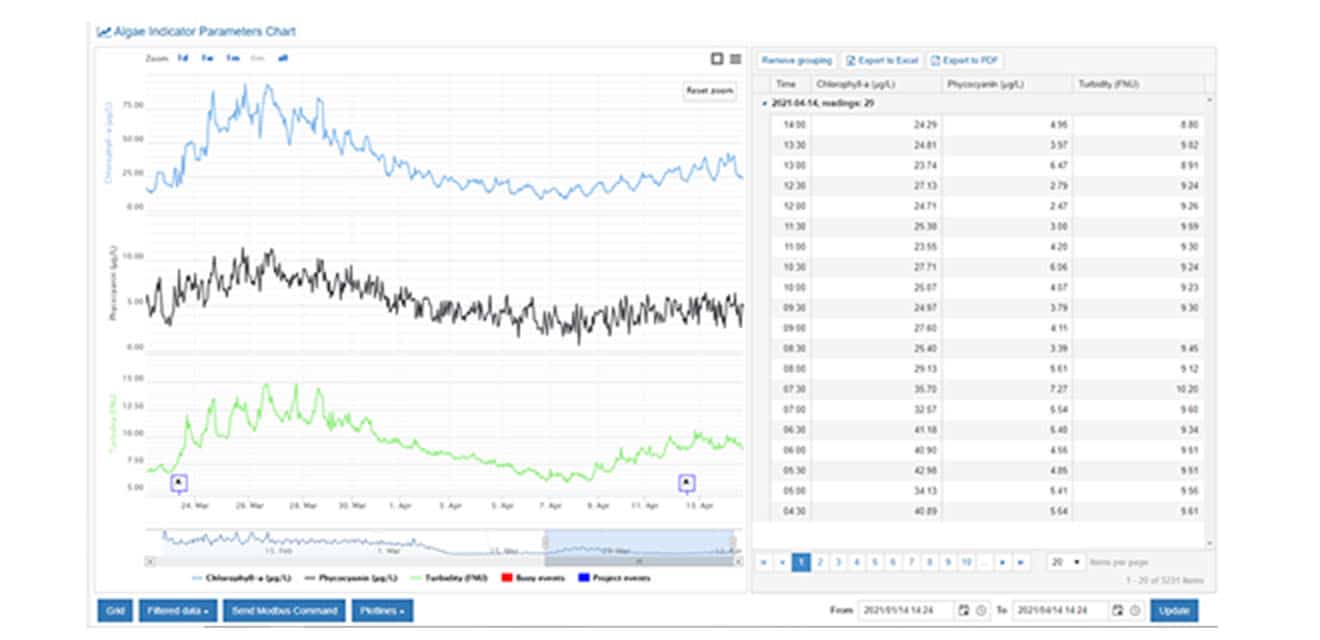
You cannot manage what you do not measure. Routine manual sampling has value, but it captures a snapshot in time at a fixed location — it cannot represent the dynamic, spatially variable conditions in a lake or reservoir throughout the day and across depths.
Real-time continuous monitoring provides the situational awareness that manual sampling cannot. In-situ buoys measure surface and near-surface conditions around the clock, delivering data directly to web-based software where operators can track trends, set threshold alerts, and identify early warning signals of bloom development.
For reservoirs where depth matters — which is most of them — combining surface monitoring with vertical profiling provides a complete picture of the water column. Subsurface cyanobacteria accumulations at the thermocline are invisible to surface sensors, but detectable by a profiling system positioned near the intake.
Satellite imagery adds spatial coverage — useful for tracking bloom extent across large water bodies and identifying surface accumulations forming in areas away from fixed sensors.
The combination of real-time data, depth profiling, and predictive modelling transforms monitoring from a passive record-keeping exercise into an active early warning system. LG Sonic’s MPC-Buoy integrates monitoring, algae prediction, and ultrasonic treatment in a single solar-powered platform — enabling water managers to detect deteriorating conditions and respond before a bloom reaches critical levels.
Preparing before the season starts
The most effective algal bloom management begins before summer arrives. Key actions to take in spring:
- Review the previous season’s monitoring data to identify bloom trigger conditions specific to your water body
- Inspect and calibrate sensors and monitoring equipment
- Verify that intake depth adjustment mechanisms are operational
- Review chemical treatment stock and confirm protocols for rapid deployment if needed
- Brief operational teams on early warning indicators and response procedures
Early preparation reduces the likelihood of reactive responses during peak season, which are more disruptive, more costly, and less effective than preventive action.
Managing a reservoir or lake through the summer bloom season? Contact our team to discuss monitoring and treatment options, or explore the MPC-Buoy to see how proactive algae management works in practice.