


Aguas del Norte has upgraded two of the five LG Sonic buoys at the El Limón reservoir to Vertical Profilers. The move adds depth to its algae monitoring, 22 months after the system went in. El Limón backs up drinking water supply for 120,000 people in Salta, Argentina.
In October 2024, Aguas del Norte (COSAYSA) placed five LG Sonic MPC-Buoys in the El Limón reservoir (Embalse El Limón). The company is the provincial water and sanitation utility of Salta, and El Limón is the main reserve of the Itiyuro system. The buoys have monitored and treated the reservoir ever since, through two Argentine summers.
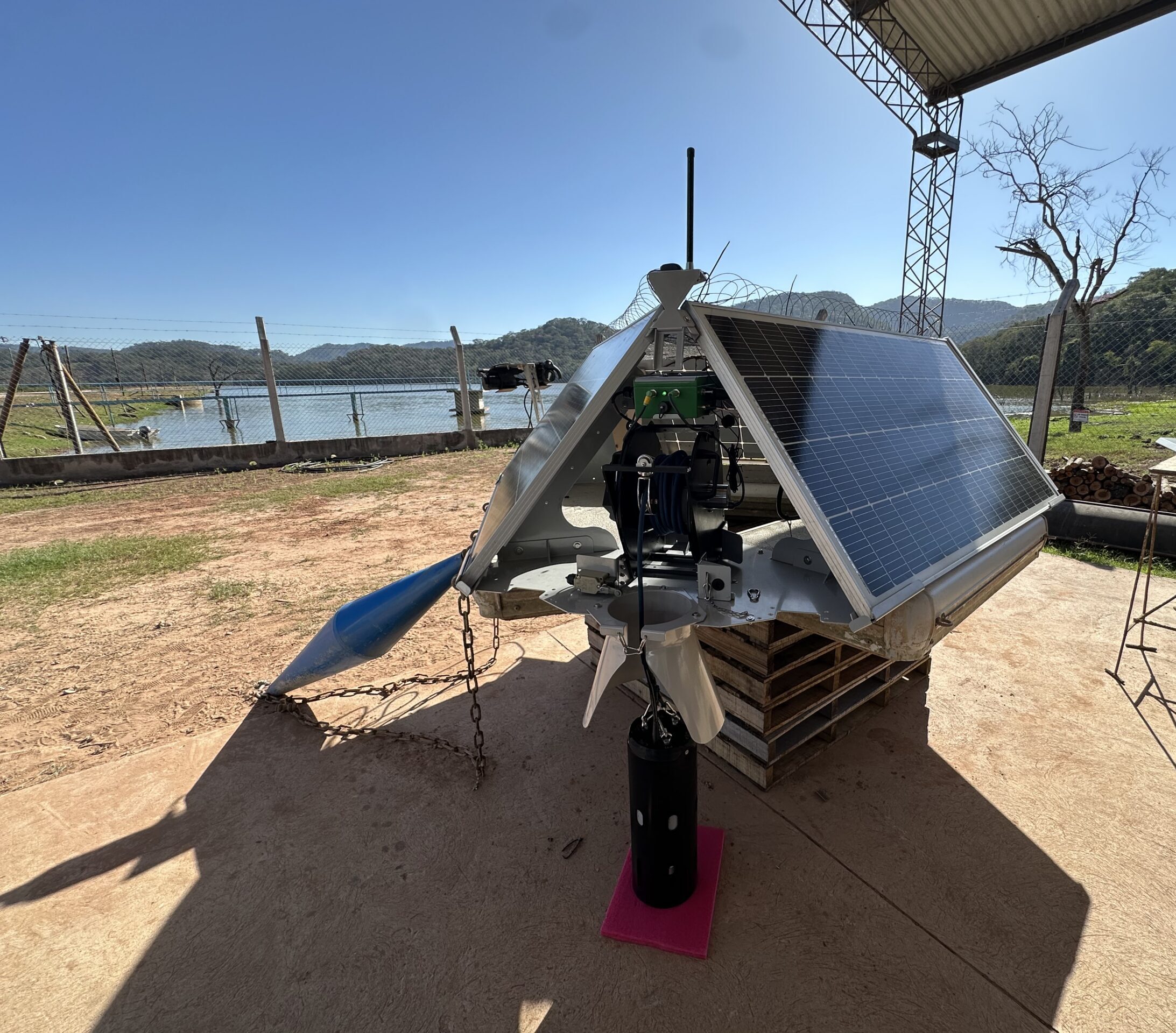
This August, the company upgraded two of those buoys to Vertical Profilers. The crew also serviced the rest of the system before the warm season. The Government of Salta announced the work on 5 August 2026.
“Maintenance work, system updates and personnel training were carried out to optimise monitoring of the main reserve of the Itiyuro system.“
— Government of Salta, Secretariat of Press and Communication (translated from Spanish)
Depth monitoring across the El Limón reservoir
El Limón is six to seven metres deep. Algae do not stay in one layer of that column. Many species control their own buoyancy, so they rise and sink through the day. WHO guidance on toxic cyanobacteria in water treats that movement as central to sampling and intake design.
A surface sensor reads one layer. A Vertical Profiler lowers its sensors through the column instead. So the team sees several depths at once in MPC-View. LG Sonic uses the same method for nutrient monitoring at different water depths.
Two profiling positions also add a second view. Aguas del Norte can now compare the river inflow with the intake, inside the same reservoir.
The El Limón reservoir is a strategic reserve for the dry season. In those months, the Itiyuro system draws on it to hold supply. Depth data feeds the calls that come up then: how deep to draw water, and where the algae sit. It also shows how the water changes before it reaches the plant.
Serviced before the season, not during it
The team scheduled the visit ahead of the Argentine summer. So treatment and algae monitoring run at full capacity through the warmest months. During the work, the crew moved buoys to match current needs. They renewed wear parts, then cleaned and checked each buoy. They also updated the software and ran signal tests. Finally, they confirmed the sensor readings and the links between units.
Aguas del Norte staff trained on site
Alongside the technical work, Aguas del Norte staff worked through cleaning, upkeep, buoy checks, connections and the MPC-View platform. So between service visits, their own team handles the routine algae monitoring at El Limón.
LG Sonic ultrasonic technology does the treatment side. It keeps algae from rising toward sunlight and weakens them over time. It adds no chemicals, and it does not release toxins. Other water companies in South America use the same method in drinking water reservoirs, among them EPM in Colombia.
What a Vertical Profiler adds
A standard MPC-Buoy reads water quality at a fixed depth near the surface. A Vertical Profiler lowers its sensor set through the water column. It takes readings at several depths, then sends the full profile to MPC-View. It can sample down to 30 metres.
For a drinking water reservoir, that answers three operational questions:
- Where are the algae? Blue-green algae migrate up and down. A surface reading alone does not show whether a bloom has sunk.
- Which depth should we draw from? Profile data supports intake calls instead of assumptions.
- What is changing, and where? With two profiling positions, inflow and intake can be compared inside the same reservoir.
Depth is where the useful information sits, measured, not estimated.
Source: Government of Salta, Secretariat of Press and Communication, 5 August 2026.