

Key points
- The 2026 algae bloom season is starting earlier and lasting longer than usual across many regions.
- Three forces are driving it: a warmer-than-average spring, low water in drought-affected basins, and steady nutrient loading.
- A longer season raises taste, odor, and cyanotoxin risk, shortens filter runs, and adds treatment cost across more weeks of the year.
- Weekly or monthly grab samples often miss fast-rising toxin levels, while continuous monitoring catches blooms days before surface scum appears.
- The most reliable response pairs early detection with source water management and chemical-free control such as ultrasound, which reduces algae but does not replace nutrient management.
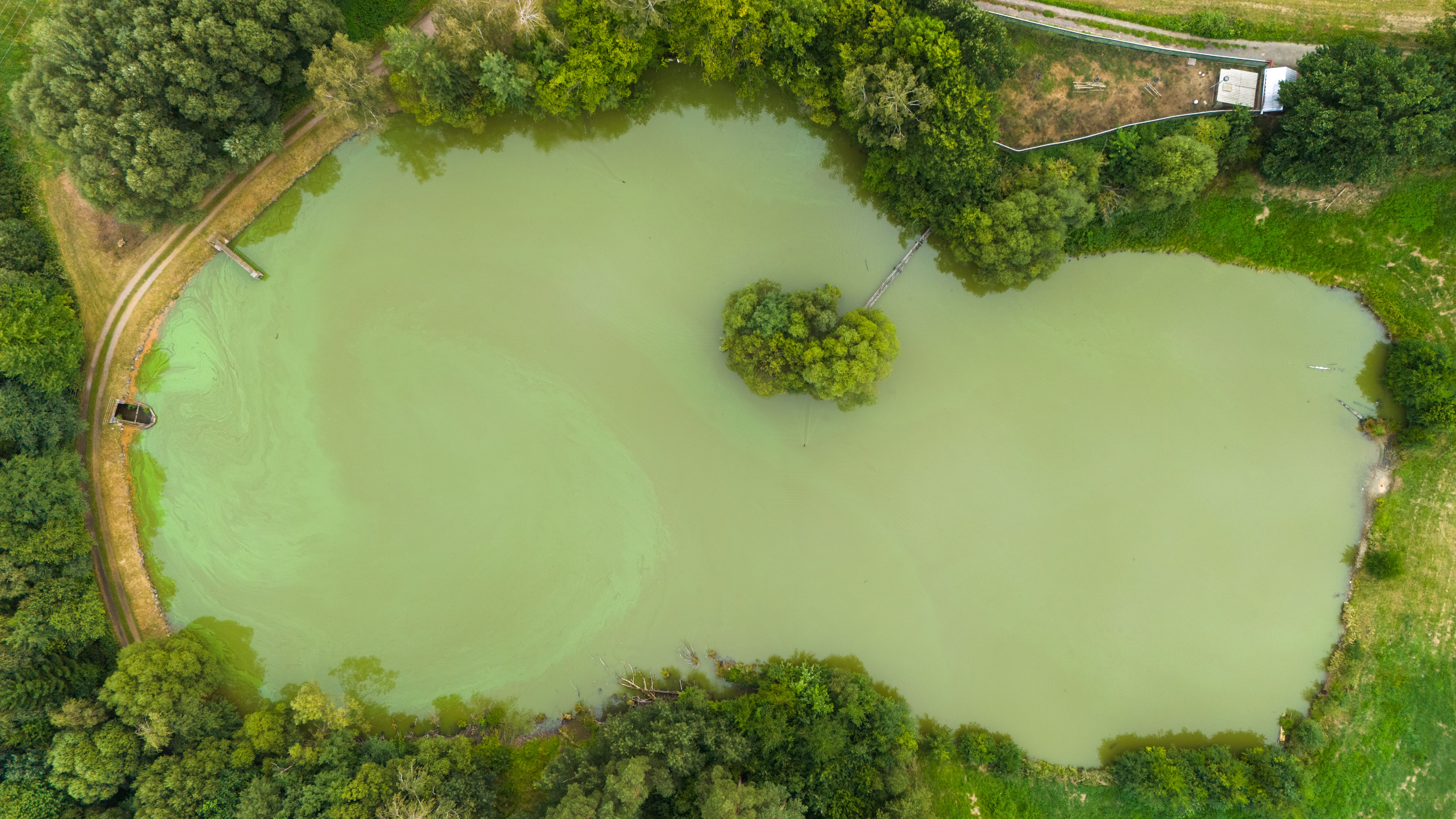
The 2026 algae bloom season is arriving earlier than usual, and three forces are behind it: a warmer-than-average spring, low flows in many basins, and the same nutrient pressure as ever. Together, they are pushing harmful algal blooms earlier in the year and stretching the monitoring season for water utilities. In several regions, bloom advisories and seasonal forecasts are already active weeks ahead of where many operators would expect them.
For water utilities and reservoir managers, that shift is operational, not just seasonal. When the algae bloom season starts sooner and lasts longer, monitoring windows stretch, and treatment plants work harder. Moreover, the risk of taste, odor, and cyanotoxin events climbs with every extra week. This article covers what is driving these conditions, what a longer season means for utilities, and what managers can do.
Why are blooms starting earlier in 2026
Three factors are converging this year, and heat sits at the center of all of them.
1. Warmer water, earlier and longer
Many bloom-forming cyanobacteria become more competitive as surface waters warm, especially under calm, nutrient-rich, and stratified conditions. Because spring and early summer were warmer than average in many areas, the bloom window opened sooner and may close later. Warm water also favors buoyant cyanobacteria over harmless green algae, since they can adjust their depth to chase light and nutrients and outcompete other species.
2. Drought concentrates the problem
Many regions entered 2026 with low snowpack and reduced rainfall. Lower reservoir levels mean shallower, warmer, slower water, which is exactly what blooms prefer. Meanwhile, reduced inflow concentrates the nutrients already present. As a result, the same phosphorus load can drive a stronger bloom than last year.
3. Nutrients are still the fuel
Heat and drought set the stage, but nutrients feed the bloom. Phosphorus and nitrogen from farms, stormwater, and legacy sediment remain the underlying driver. However, even where utilities have cut external inputs, internal loading from low-oxygen sediment can sustain blooms for years. EPA resources link freshwater bloom risk to nutrient pollution, warmer water, and conditions that favor bloom formation. EPA HAB forecasts typically run from April through November, when bloom probability is highest.
What a longer algae bloom season means for water utilities
A bloom is not only an ecological event. For a drinking water utility, each bloom season brings a chain of operating and financial pressures that build for months.
Taste, odor, and customer complaints
Cyanobacteria release compounds such as geosmin and MIB. These produce earthy, musty tastes at extremely low concentrations. Because they are hard to remove, they trigger customer complaints long before any health threshold is crossed. Taste and odor problems are often the first sign a utility sees.
Higher treatment costs and shorter filter runs
Dense biomass increases organic load and shortens filter run times. In addition, it raises coagulant and powdered carbon demand. As the season lasts longer, these costs accumulate across more weeks of the year. The economic impact of algae blooms on utilities is well documented, from added chemicals to extra staff time.
Cyanotoxins and compliance pressure
Some cyanobacteria produce cyanotoxins, including microcystins, that dissolve into the water. Because these toxins can pass through conventional treatment, they create genuine compliance and public-health exposure. Moreover, the harder problem is timing, because toxin levels can rise within days. Weekly or monthly grab samples often miss that inflection point.
Documented in the field
Anglian Water, Alton Water (United Kingdom)
Persistent cyanobacteria blooms were straining the treatment works at Alton Water, which serves more than 92,000 properties. Ultrasonic treatment reduced bloom pressure at the source, without chemicals or added operational downtime, before toxins reached the intake.
How to tell a harmful bloom from harmless green algae
Not every green water body is dangerous, and not every dangerous bloom looks alarming. Still, a few visual cues help operators and the public respond sensibly.
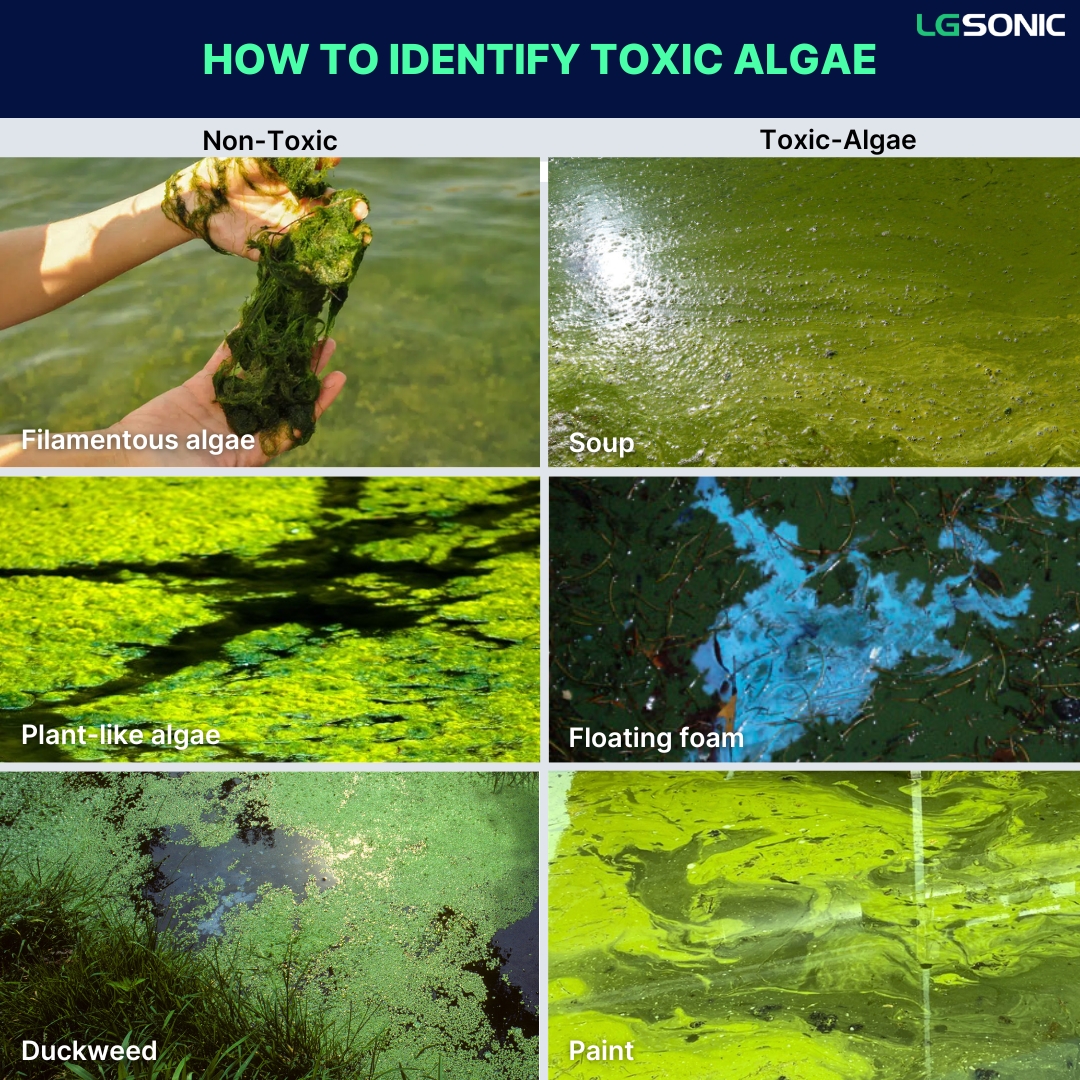
Harmful cyanobacterial blooms often look like spilled paint, pea soup, or grass clippings on the surface. Harmless green algae, by contrast, tend to form stringy mats or look like underwater moss. However, appearance alone cannot confirm whether a bloom is toxic. As the EPA and state agencies stress, only laboratory testing can confirm toxins. So the standard advice stays simple: when in doubt, stay out.
In short, for utilities, visual checks are a starting point, not a decision tool. A reliable read on bloom risk depends on measured parameters, not the naked eye. Our guide to identifying toxic algae walks through the differences in more detail.
What water managers can do during the algae bloom season
The algal bloom season is already underway, so the practical question is useful. What reduces risk now, and what prepares the system for next year? Therefore, three moves matter most.
1. Detect blooms early with continuous monitoring
Bloom conditions can change within days, so detection speed is critical. Continuous in situ monitoring tracks chlorophyll-a and phycocyanin as cyanobacteria rise. As a result, it often flags a problem days before any surface scum appears. Platforms such as the LG Sonic Monitoring Buoy report this data automatically. Operators can then anticipate bloom conditions rather than react to them. Dissolved oxygen matters here, too. When deep-water DO falls below about 2 mg/L, sediment begins releasing the phosphorus that feeds the next bloom.
2. Manage the problem at the source
Treating algae at the intake or inside the plant is reactive and costly. By contrast, a source water approach reduces how much the treatment process has to absorb. Watershed and nutrient management is the most durable strategy of all. Its limitation is time, because legacy phosphorus lingers in sediment for years. For active blooms this season, many utilities add an in-reservoir control layer as well.
3. Add chemical-free control where blooms are active
Ultrasonic systems are one such complementary tool. Low-power ultrasound disrupts the buoyancy of cyanobacteria. The cells then sink below the sunlit zone and lose their growth advantage. Because the method uses no chemicals, it avoids the toxin-release and by-product concerns tied to copper-based algaecides. It is worth being clear about the boundaries, though. Ultrasound reduces algae and helps control blooms, but it does not remove the nutrient load. Therefore, it works best alongside source and watershed management, not in place of it.
Documented in the field
CAASD’s Valdesia reservoir, Dominican Republic
On a 7 km² reservoir that supplies drinking water to around 4 million people in Santo Domingo, CAASD documented an 87% reduction in chlorophyll-a after deploying MPC-Buoy systems. The deployment pairs real-time monitoring with adaptive ultrasonic control.
| Read the complete guide for water utilities |
Getting ahead of the next algae bloom season
This year’s conditions are a preview, not an exception. As warming continues, each bloom season is likely to start earlier and last longer. Consequently, the utilities that cope best treat algae as a year-round program, not a summer scramble.
In practice, that means three things. First, put continuous monitoring in place before the algae bloom season begins. Second, build a source water plan that pairs nutrient management with active control. Finally, agree on response thresholds so the team acts the moment parameters cross them. None of these steps is exotic. Together, they move from reacting to blooms toward managing them.
Frequently asked questions about the algae bloom season
When is the algae bloom season?
In most regions, algae bloom season runs from late spring through fall, when water is warm and stratified. EPA harmful algal bloom forecasts typically cover April through November, when bloom probability is highest. Warmer springs are now pushing the start of the season earlier in many basins.
Why are algae blooms starting earlier in 2026?
Three conditions are converging this year: a warmer-than-average spring, low water levels in drought-affected basins, and steady nutrient loading from farms, stormwater, and legacy sediment. Warm, shallow, nutrient-rich water is exactly what bloom-forming cyanobacteria prefer.
How can you tell a harmful bloom from harmless green algae?
Harmful cyanobacterial blooms often look like spilled paint, pea soup, or grass clippings on the surface, while harmless green algae tends to form stringy mats or underwater moss. Appearance alone cannot confirm toxicity, though. Only laboratory testing can confirm toxins, so when in doubt, stay out.
Can algae blooms be managed without chemicals?
Yes. Utilities increasingly pair continuous monitoring with source water management and chemical-free control, such as low-power ultrasound, which disrupts cyanobacteria’s buoyancy. Ultrasound reduces algae and helps control active blooms, but it does not remove the nutrient load, so it works best alongside watershed and nutrient management.
Protect your reservoir before the next bloom
See how utilities use real-time monitoring and chemical-free ultrasonic control to manage harmful algal blooms at the source.
| Explore the MPC-Buoy |