

Short answer
Algae in mine water is an operational problem, not a cosmetic one. It shortens filter runs, degrades clarifier overflow, raises coagulant and polymer dose, and pulls oxygen out of the reuse line. Step one is establishing whether algal biomass or mineral solids is driving the symptom, because the two need different responses. Step two is connecting pigment data to whichever operational indicator fails first. Ultrasonic control then addresses the biological fraction at the pond, reducing the load reaching clarification and filtration. Deployments at Vale’s Barragem Sul tailings dam, the Masbate Gold Project and a peer-reviewed utility reservoir programme document the outcome.
Algae control in mining rarely reaches a site water strategy until it starts costing throughput. Where a pond has enough light, residence time, warmth and nutrients, growth establishes, and the consequences appear downstream: sand filters blind, clarifier overflow clarity drifts, polymer dose creeps upward, and the recycle line begins to smell. No cost report labels any of those items as algae, so the expense stays invisible.
This guide covers where algae develops in a mine water circuit, how to tell biological load apart from mineral solids, what it costs, what the documented results look like at working mine sites, and how to measure it reliably in water that defeats most optical instruments. For broader context on mine water strategy, see our overview of water management in the mining industry.
Where algae develops in a mine water circuit
Algae does not appear everywhere on a mine site. It develops where light, residence time, temperature and nutrients coincide, which narrows the problem to a few locations.
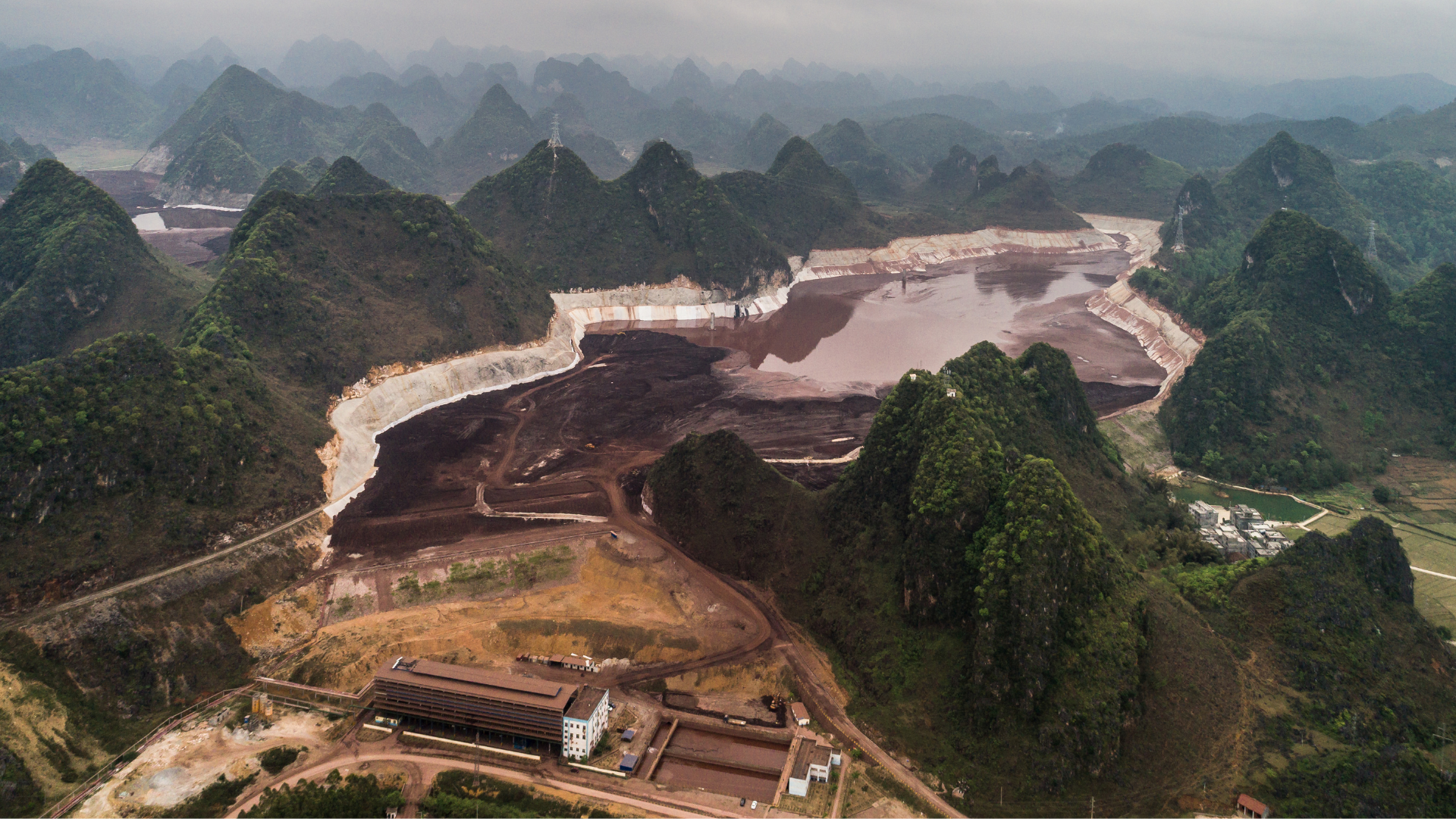
A water-covered tailings storage facility may include a supernatant or reclaim-water pond where algae can establish, and a tailings pond of that kind is one of the main locations where mine-water algae problems can develop. Reclaim water ponds and process water reservoirs are frequently more productive still, because they are shallower and turn over more slowly than the operation assumes. Raw water reservoirs at remote sites are a separate case, and at many operations they also serve the surrounding community.
Not every facility is at risk. Many mine waters are too turbid, too acidic, too saline or too light-limited to sustain meaningful biomass. Working out which of your ponds can actually support growth is cheaper than treating all of them.
Mine water chemistry varies substantially by commodity, ore mineralogy, reagent regime and water circuit. Lime-dosed circuits can produce alkaline reclaim water, since lime is added to raise pH and precipitate metal hydroxides, a relationship EPA tabulated for tailings-pond effluent decades ago. Oxidation of sulfide minerals can produce acidic, metal-rich drainage instead. Salinity and ionic strength also tend to rise in heavily recycled circuits. Each of these conditions affects both the algal community and the reliability of optical monitoring, so characterise them site by site rather than assuming from commodity alone.
Is the problem algae, mineral solids, or both?
This question comes before any treatment decision, and getting it wrong is expensive in both directions. Rising turbidity, shortening filter runs and poor clarification all have at least two possible causes at a mine site. Mineral solids and algal biomass produce overlapping symptoms but need entirely different responses.
The distinction matters commercially as well. Algae control does not reduce mineral suspended solids. Any performance forecast must therefore distinguish biological biomass from mineral tailings fines.
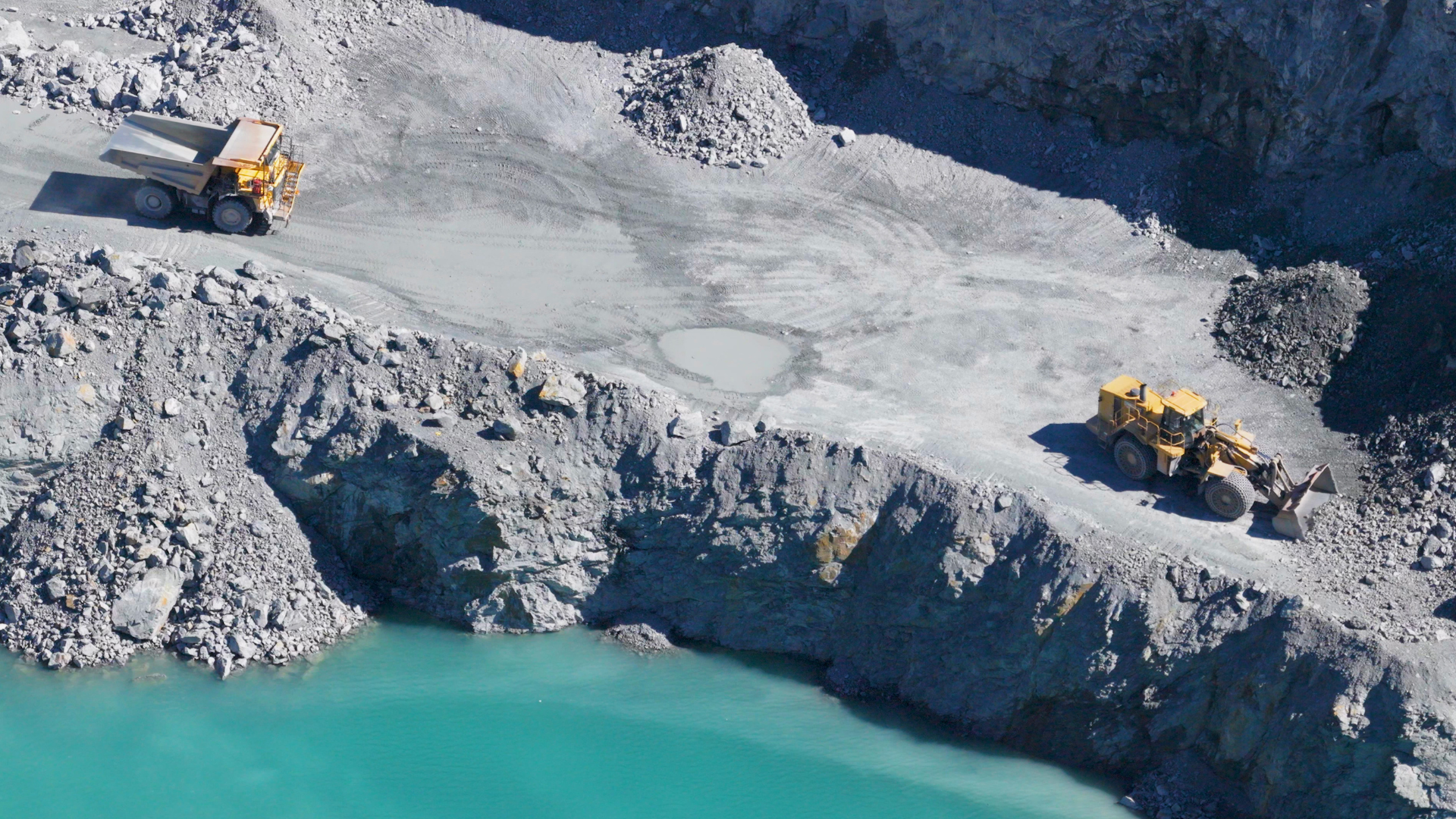
Milky turquoise from suspended rock flour – Mineral turbidity.
The signals below separate the two in most cases. None is conclusive alone, so read them together.
| Signal | Consistent with algae | Consistent with mineral solids | How to verify |
|---|---|---|---|
| Laboratory-validated chlorophyll-a rises | Yes | No | Laboratory chlorophyll-a |
| Validated phycocyanin trend rises | Cyanobacterial growth | No | Microscopy or laboratory analysis |
| Turbidity rises after rainfall | Possible | Common | TSS with fixed/volatile solids, particle analysis |
| Daily pH and dissolved oxygen cycle | Common | Unlikely | Continuous pH and DO |
| Green surface accumulation | Common | Sometimes misleading | Microscopy |
| Filter slime or organic coating | Common | Less likely | Filter inspection |
| Abrasive mineral deposit on media | No | Common | Solids analysis |
| Turbidity rises without pigment response | Less likely | More likely | TSS with fixed/volatile solids, fluorescence validation |
How to verify, and what the methods cannot tell you
Two verification steps resolve most ambiguous cases, provided their limits are understood.
First, ask the laboratory to measure total suspended solids together with fixed and volatile suspended solids, using an accepted water or wastewater method such as EPA Method 160.4 or the applicable local equivalent, then pair that with laboratory chlorophyll-a and microscopy. Total suspended solids reports a combined dry mass including both mineral particles and organic material, so chlorophyll-a and total suspended solids on their own cannot separate the two fractions. Ignition-based methods only estimate the split. EPA Method 160.4 describes the test as a rough approximation of organic matter, subject to errors including decomposition of mineral salts during combustion, and states that results should not be treated as an accurate measure of organic carbon. In mine waters containing volatile inorganic salts or thermally unstable mineral phases, the volatile fraction may therefore overstate organic content. Microscopy is what establishes whether the organic fraction is actually algal, and which taxa dominate.
Second, examine continuous pH and dissolved oxygen for a repeatable daily cycle. A pronounced daytime rise and overnight decline supports a photosynthetic contribution, although it does not identify the organisms by itself. Mineral solids alone do not produce the coupled daytime-rise and overnight-decline signature expected from photosynthesis and respiration, although temperature, gas exchange, pumping and other operations can also cause daily variation.
What algae costs a mining operation
Algae control in mining seldom appears as a line item of its own. Instead it surfaces as five separate costs that operations usually attribute to something else.
Clarification and thickening
Many algal cells are buoyant or slow-settling, so they report to clarifier overflow rather than underflow. Overflow clarity degrades and solids carry further into the circuit. Operators typically compensate by raising polymer dose or reducing throughput, and neither response addresses the cause.
The most useful plot pairs chlorophyll-a and phycocyanin against the operational indicator that fails first, such as clarifier overflow turbidity, filter differential pressure, filter run length or polymer dose. Apply the plant’s written limit to that operational indicator, then identify the pigment range that consistently precedes the excursion.
Filter run length and cleaning labour
Sand filters are where the problem becomes impossible to ignore. Cells and their extracellular material blind the media, so run lengths shorten and backwash frequency rises. At severe sites, filter cleaning becomes a daily task. That carries labour cost, backwash water cost and throughput cost at the same time.
Coagulant, flocculant and algicide dose
Dose creep is the most common hidden cost. Because algal biomass raises turbidity and organic load, coagulant and flocculant demand tends to rise with it, and algicide spend sits on top. Track daily dose records in kilograms or litres alongside unit price. Record any other process change in the same period as well, since a new polymer or a pH adjustment will confound the comparison.
Reuse water quality and odour
Mines recycle as much contact water as they can. However, a bloom that collapses consumes oxygen as it decomposes, which pushes the diurnal dissolved oxygen minimum down and can produce odour in the recycle line. Odour complaints from nearby communities are a social licence issue rather than a process issue, and they escalate faster than most operational problems.
Discharge compliance
Water leaving the site must meet permit conditions, and jurisdiction determines those conditions. For operations in the United States, see our overview of NPDES effluent requirements alongside EPA’s ore mining and dressing effluent guidelines. Depending on the country, commodity, receiving water and discharge route, a permit may regulate pH, suspended solids, metals, cyanide, nitrogen species, sulfate, organic load, toxicity or flow. Algal growth can affect pH, dissolved oxygen, turbidity and organic matter. Check whether that translates into a compliance exposure against your actual permit rather than a general rule.
Proven results in mining and reservoir water
Three mining deployments and a peer-reviewed utility reservoir programme show how this works across different water types.
Masbate Gold Project, Philippines
At Phil Gold Processing and Refining Corp, algal growth in the tailings dam was blinding the sand filters at the water treatment plant. Filter cleaning had become a daily task, and it was driving operating and maintenance cost. Six MPC-Buoy systems were installed in February 2021. Six months later the site reported lower and more stable chlorophyll-a readings, improved water quality both before and after discharge treatment, and reduced filter-cleaning frequency.
Vale, Barragem Sul tailings dam, Brazil
Vale is a major iron ore producer. Algal blooms in the Barragem Sul dam produced foul odours and prompted water quality complaints from nearby residents, which is a social licence problem as much as a process one. Three MPC-Buoy units were deployed on 8 May 2021, one with combined treatment and monitoring capability and two treatment-only. Post-installation monitoring reported consistently low chlorophyll-a and phycocyanin. The project was co-funded by the Netherlands Enterprise Agency under its Demonstration, Feasibility and Investment programme.
|
Documented deployment Vale, Barragem Sul tailings dam The full case covers the deployment configuration, the parameters monitored at the dam and how an odour and community complaint problem was addressed at an iron ore operation in a high-rainfall region. |
Read the Vale case |
Gold mine community reservoir, Peru
A large gold mine in Peru maintains a community drinking water reservoir as part of its social commitments. Algae control there protects supply for more than 5,000 families, which is the same technology applied to a drinking-water reservoir rather than a process-water pond. Further detail sits with our wider gold mining work.
Canoe Brook Reservoir, New Jersey: the peer-reviewed result
The most fully documented result comes from a drinking water utility facing the same failure mode a mine faces, and it was published independently. Schneider, Weinrich and Brezinski, writing in Journal AWWA, installed four MPC-Buoy units in Canoe Brook Reservoir 1 at Short Hills, New Jersey. The reservoir covers 200 acres, had a history of blooms and taste-and-odour problems, and had previously relied on copper treatment. The buoys ran for five months across spring and summer, and the authors concluded that the ultrasonic system was effective for controlling algae when the correct ultrasonic program was used. The authors were American Water and New Jersey American Water staff, reporting on their own utility’s water.
The utility report documented a 22 percent reduction in chemical use, a 127 percent improvement in filter runs against the prior year and a projected payback of 1.8 years. LG Sonic’s published case summary additionally reports 89 percent less algae growth.
Controlled research published in Environmental Technology has examined responses across cyanobacteria, green algae and diatoms. That supports matching the ultrasonic programme to the organisms actually present, which matters in mining because mine ponds are rarely dominated by one species.
The mining results above come from LG Sonic site monitoring. The New Jersey results were reported by the utility’s own staff in a peer-reviewed publication.
How ultrasonic control works
Two facts matter operationally. Nothing is added to the water, so there is no dose to escalate and no residue to account for at the discharge point. And because these low-power systems are designed to avoid cell rupture, they do not cause the sudden release of cellular material that follows a chemical bloom knockdown.
Cyanobacteria hold position in the sunlit upper layer by regulating their buoyancy continuously, in response to light. Low-power ultrasound interferes with that regulation, varying amplitude, frequency and waveform so the conditions around the cell keep shifting. Cells lose the ability to stay near the surface, settle below the light zone, and lose the growth advantage buoyancy gives them. The settled biomass is then broken down naturally over time. Because buoyancy behaviour varies between species, identifying what is actually dominant in your pond is the first sizing input.
Where a pond discharges to a receiving water or sits near a community, the organism question comes up in permitting. Independent testing has covered it: a Dutch water board commissioned research concluding the system is safe for zooplankton, and the University of Portsmouth, UNICET Catania and BOKU Austria reached the same conclusion for fish. The full evidence on aquatic organisms is collected separately.
What ultrasound does not do, and what it complements
Each boundary below also identifies what ultrasound sits alongside rather than replaces.
- It does not reduce the nutrient load. Nutrients that arrived with reagents or runoff stay in the pond, and sediment keeps releasing phosphorus under anoxic conditions. Nutrient and water-balance management stays the durable fix. In-pond control works on a shorter timescale alongside it, which matters because nutrient reduction programmes can take years to change a pond that is already productive.
- It leaves metals, cyanide, acidity and salinity untouched. Your existing chemical and physical treatment train still handles those. Ultrasound addresses a different constituent in the same water rather than competing with that train.
- It does not replace clarification or filtration. It reduces what they have to absorb, which is where the operational return sits. A lower suspended algal load means longer filter runs between backwashes and less coagulant and polymer per cubic metre treated. The New Jersey utility study is the documented example: filter runs improved while chemical use fell.
- It does not change mineral turbidity. If your suspended solids problem originates in tailings fines, thickening and clarification remain the answer and algae control will not resolve it.
Read together, that is the position on fit. Ultrasound is a preventive layer that reduces biological load on equipment you already run, and it can extend filter runs and increase the interval between cleaning and backwashing cycles. It is not a treatment train, and it does not remove the reason a pond is productive in the first place.
Monitoring algae in optically complex mine water
Mine water presents difficult conditions for optical instruments, so understanding where each measurement can fail is essential.
What to measure
Six measurements provide the core operational picture. Chlorophyll-a is a proxy for photosynthetic algal biomass, although the relationship between pigment concentration and biomass varies with species, light history and physiological condition. Phycocyanin is a screening indicator for cyanobacterial biomass, and it gives early warning of cyanobacterial growth without confirming that cyanotoxins are being produced. Turbidity identifies changes in particle light scattering, and correlating it with total suspended solids requires site-specific calibration first. Dissolved oxygen and pH reveal photosynthetic and respiratory cycling, particularly when overnight minima and depth profiles are considered. Temperature explains seasonal growth conditions and helps interpret everything above.
Where measurement fails in mine water
Mine water is a hard place to measure any of them. The failure modes matter more than the sensor specifications, which is why field validation matters more than a datasheet.
- Fluorescence readings can be biased in either direction. Turbidity, colour and dissolved or particulate matter interfere with in-situ fluorescence through both scattering and absorbance. Bias direction and magnitude depend on the water matrix and the specific instrument, so neither can be assumed from a datasheet. A site-specific calibration is what turns a raw reading into a usable number.
- Turbidity is not total suspended solids. Turbidity measures light scattering; suspended solids is a mass concentration. In mine water, particle size, colour and mineralogy change the relationship substantially. Turbidity works as a continuous surrogate only once you establish a site-specific relationship with laboratory results.
- Turbidity spikes are often mineral, not biological. After rainfall or a tailings density current, a rise in scattering usually reflects mineral solids. Attributing that spike to algae undermines any later performance claim.
Depth, fouling and data gaps
- Sensor depth is not intake depth. A surface sensor measures the surface. If the clarifier draws from ten metres, cite the intake depth explicitly and treat the two as different measurements.
- Surface dissolved oxygen hides bottom anoxia. Stratified ponds can look healthy at the top while the bottom is anoxic and releasing nutrients. Detecting that needs a depth profile or sensors at multiple depths, whether by manual profiling, fixed multi-depth instruments or an automated profiler.
- Optics foul quickly. Biofouling on a sensor window drifts readings within weeks in a productive pond. Automatic wiper systems reduce the problem substantially, but you still need a documented verification interval.
- Downtime distorts day counts. Any statistic of the form “days above threshold” means nothing unless you remove outage periods first.
None of this argues against continuous monitoring. Rather, it argues for continuous monitoring that is calibrated against grab samples and reported with its gaps visible.
Site conditions that change the picture
Two site variables dominate. Hydraulic residence time depends on pond volume and on inflow and outflow, rather than on recycling rate alone. High reuse can increase the cumulative time water and dissolved constituents stay within the overall circuit, but you must calculate the residence time of any individual pond from its own water balance. Light availability governs whether meaningful photosynthetic growth is possible at all, and high mineral turbidity can suppress blooms independently of nutrient availability.
Water scarcity therefore cuts both ways. Arid-region operations often maximise reuse. Depending on the circuit water balance and pond turnover, that can increase cumulative retention and concentration within the system, while making any disruption to the reuse loop more expensive per cubic metre. High-rainfall operations face the opposite measurement problem, because runoff raises nutrients and mineral turbidity together, and the mineral signal masks the biological one.
Seasonality is the variable most often underestimated. Sites with historically seasonal sampling frequently have no record of their actual peak, because sampling and peak did not coincide. Set thresholds against your own site history rather than a regional benchmark, and use at least two comparable seasons matched month for month.
Three levels of intervention
Algae control in mining is not a single product decision. Mine water offers three levels of intervention, and a programme that works usually combines them rather than picking one.
Control the drivers
Nutrient and runoff management, reagent and water-balance management, residence-time or withdrawal management, internal nutrient-release management, and separation of clean from contact water where the layout allows it. This level is the most durable and the slowest.
Manage growth in the water body
Mixing or aeration, chemical algicides or oxidation, ultrasound, mechanical removal where access permits, and covers or shading for small contained systems only. Response time varies here, from hours or days for some reactive treatments to weeks or a full season for preventive approaches.
Protect the treatment plant
Coagulation and flocculation, clarification or dissolved air flotation, screening and media filtration, and pre-oxidation where it is chemically and operationally compatible. This level is where you already spend money, and reducing the load reaching it is the main economic argument for the level above.
Establishing baselines and action levels
There is no universal chlorophyll-a or phycocyanin action threshold for mining. Derive action levels from the pigment concentrations and water quality patterns that precede a site-specific process or compliance problem.
That matters because most mines have no written pigment limit at all. What they do have are operational specifications for clarifier overflow turbidity, filter differential pressure, filter run length, backwash frequency, reuse water quality and discharge quality. The workable method therefore starts at the process failure and works backwards to the biological warning signal.
- Identify the operational outcome that needs protecting, such as clarifier overflow quality, filter run length, backwash frequency or a reuse water specification.
- Obtain the plant’s written limit or normal operating range for that outcome, in the units the plant uses.
- Compare historical chlorophyll-a, phycocyanin, turbidity, pH and dissolved oxygen against the periods when that operational limit was approached or exceeded.
- Set site-specific alert, investigation and action levels rather than one universal threshold.
- Use two comparable seasons where possible. Where only one season exists, treat the initial levels as provisional and revise them as data accumulate.
- Record sensor depth, intake depth, calibration events, laboratory verification and data outages, so that every later figure can be footnoted correctly.
With those six items in place you can show what changed and attribute it properly. That is the framework we recommend for establishing a defensible baseline, measuring change and attributing operational outcomes, and it is what we ask a site for during a consultation.
Site qualification checklist
Five questions settle most feasibility discussions before anyone visits the site.
- Pond geometry and depth. Acoustic coverage depends on basin geometry, depth and site water conditions, so it has to be assessed for the individual pond rather than scaled from surface area. Long or heavily embayed basins need more coverage than area alone suggests.
- Dominant species. Microscopy or laboratory identification establishes what you are treating, which sets the acoustic programme. The Journal AWWA study is explicit that programming is what separated effective from ineffective operation.
- Hydraulic connections. The New Jersey study recorded a mid-season inflow of untreated water from an adjacent reservoir that reseeded the treated basin. An unmapped transfer line does the same thing in a mine circuit.
- Water level movement and access. Mooring design depends on annual drawdown range, and restricted access affects both installation and verification sampling.
- Data transmission and verification capacity. Confirm cellular or satellite coverage, and identify who performs periodic laboratory sampling, since remote sites rarely have spare capacity.
Biofouling deserves separate attention. Productive ponds foul sensor optics and transducer surfaces within weeks, and a fouled transducer degrades quietly rather than failing outright. Automatic cleaning reduces the problem, but a documented inspection interval remains necessary.
Related
Mining applications overview · Water management in mining · Algae control in gold mining · Turbidity and TSS explained
Frequently asked questions about algae control in mining
How can a mine tell whether algae or suspended tailings solids are causing the problem?
Measure total suspended solids together with fixed and volatile suspended solids, or loss on ignition, then pair that with laboratory chlorophyll-a and microscopy. Total suspended solids includes both mineral and biological particles, so chlorophyll-a and suspended solids alone cannot separate the two fractions. Continuous pH and dissolved oxygen showing a repeatable daily cycle supports a photosynthetic contribution.
Does algae control reduce TSS?
It may reduce measured suspended solids at an intake or outlet only to the extent that suspended algal biomass contributes to the sample and the intervention reduces that suspended fraction. It will not reduce mineral tailings fines. Confirm the likely contribution with total suspended solids, fixed and volatile suspended solids, laboratory chlorophyll-a and microscopy before forecasting any reduction.
What causes algae blooms in tailings ponds?
Sufficient light, long residence time, warm surface layers and available nutrients occurring together. Many mine waters never meet all four conditions, because they are too turbid, too acidic, too saline or too light-limited. Establishing which of your ponds can actually support growth comes first.
How does algae affect clarifier performance?
Many algal cells are buoyant or slow-settling, so they report to clarifier overflow rather than underflow. Overflow clarity degrades and solids carry further into the circuit. Operators typically compensate with higher polymer dose or reduced throughput.
Why does algae clog sand filters at a mine water treatment plant?
Cells and their extracellular material blind the filter media. Run lengths shorten, backwash frequency rises, and at severe sites cleaning becomes a daily task. That carries labour, backwash water and throughput costs at the same time.
Can you control algae in a tailings pond without chemicals?
Yes. Mixing, aeration, ultrasound and mechanical removal all avoid chemical addition. Ultrasonic control is the option with documented mining deployments behind it, at Vale’s Barragem Sul tailings dam and the Masbate Gold Project, plus a peer-reviewed reservoir programme at a US utility. Mixing disrupts stratification but redistributes cells rather than removing them. Mechanical removal requires pond access and does nothing between interventions.
Can ultrasound work in highly turbid mine water?
Yes. Systems can be deployed in high-turbidity mine water, but coverage must be designed around basin geometry, depth, dominant organisms and site water conditions rather than surface area alone. Turbidity has a particularly important effect on optical monitoring, so chlorophyll-a and phycocyanin readings require site-specific calibration against laboratory samples.
Can algae control in mining reduce coagulant and flocculant consumption?
Sometimes, because algal biomass raises turbidity and organic load, which drives coagulant and flocculant demand. Attributing a reduction credibly requires daily dose records, unit prices, and notes on any other process change in the same period.
What data are required before sizing an algae-control system?
Pond geometry and depth, annual water level range, dominant species from microscopy or laboratory identification, the plant’s written process limit in its own units, two comparable seasons of peak values, and confirmed intake depths. Without these, no supplier can size a system defensibly.
What sensors work in high-turbidity mine water?
Optical chlorophyll-a and phycocyanin sensors can be used in some high-turbidity mine waters, but performance is instrument-specific and matrix-specific. Turbidity, colour and particulate matter interfere with fluorescence through both scattering and absorbance, and bias can run in either direction. Confirm the useful range and the interference through paired laboratory samples before relying on readings for operational decisions.
What dissolved oxygen level does tailings water reuse require?
There is no universal figure, so request the written minimum from your own process specification. The useful metric is the diurnal dissolved oxygen minimum, because a collapsing bloom consumes oxygen overnight and can produce odour in the recycle line.
Does algae affect mine discharge compliance?
It depends on the permit. Algal growth can affect pH, dissolved oxygen, turbidity and organic matter, and those parameters appear in many mining permits. Whether that creates an exposure has to be checked against your jurisdiction, commodity, receiving water and discharge route.
Does ultrasonic treatment remove nutrients or metals?
No. Nutrient load, metals, cyanide, acidity and salinity all still require the treatment steps already in place. Ultrasound acts on algal growth, reducing the suspended biological load those steps have to absorb. At the New Jersey utility reservoir that translated into longer filter runs and lower chemical use.
How does a remote site with no grid power affect the options?
Solar-powered units avoid a grid connection entirely, and remote sites often have the strongest operational case because labour and logistics costs are highest there. Confirm cellular or satellite coverage for data transmission before committing, since service is unreliable at many pit and tailings locations.
|
Mining and industrial water Request a mine-water technical review Send us your pond geometry and whatever water-quality or process data you already have. We will identify the gaps, explain what can be measured reliably at your site, and say whether a monitored evaluation is justified. |
Request a technical review |